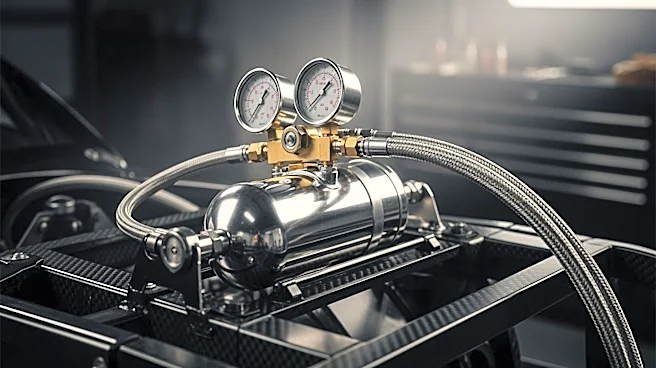







Nitrous oxide systems, often referred to as NOS, are a popular method for boosting engine performance in racing vehicles. By injecting nitrous oxide into the engine, these systems increase the amount of oxygen available for combustion, allowing for more fuel to be burned and thus increasing power output. This article delves into the mechanics of how nitrous oxide systems work and their application in the racing world.
How Nitrous Oxide Systems Work
Nitrous oxide systems function
by introducing additional oxygen into the engine's combustion process. When nitrous oxide (N2O) is injected into the engine, it decomposes into nitrogen and oxygen. This decomposition releases oxygen, which is then used to burn more fuel than would be possible with air alone. The result is a significant increase in power output, as the engine can burn fuel at a higher rate.
There are two main types of nitrous oxide systems: dry and wet. In a dry system, nitrous oxide is injected separately from the fuel, while in a wet system, nitrous oxide is mixed with additional fuel before being introduced into the engine. Each system has its advantages, with wet systems often providing more precise control over the air-fuel mixture.
Types of Nitrous Oxide Systems
Nitrous oxide systems can be further categorized based on their delivery methods. Single nozzle systems introduce the nitrous or fuel/nitrous mixture through a single injection point, typically placed in the intake pipe. Direct port systems, on the other hand, introduce the mixture as close to the intake ports as possible, using individual nozzles for each intake runner. This method allows for more precise distribution and greater power potential.
Plate systems use a spacer with holes drilled along its interior to distribute the nitrous or fuel/nitrous mixture. These systems are easily reversible and require minimal permanent changes to the engine. Bar systems, which use a hollow tube with holes to deliver nitrous, are often used in dry applications due to their non-optimal fuel distribution.
Application in Racing
Nitrous oxide systems are widely used in various forms of auto racing, including drag racing and street racing. They provide a cost-effective way to increase engine power without extensive modifications. However, the use of nitrous oxide in racing requires careful attention to engine components and mixing systems to prevent damage from excessive pressure and temperature.
While nitrous oxide systems are popular in racing, their use is often restricted or prohibited in street vehicles due to safety concerns and regulations. Despite these limitations, nitrous oxide remains a staple in the racing community, offering a significant performance boost for those looking to gain an edge on the track.