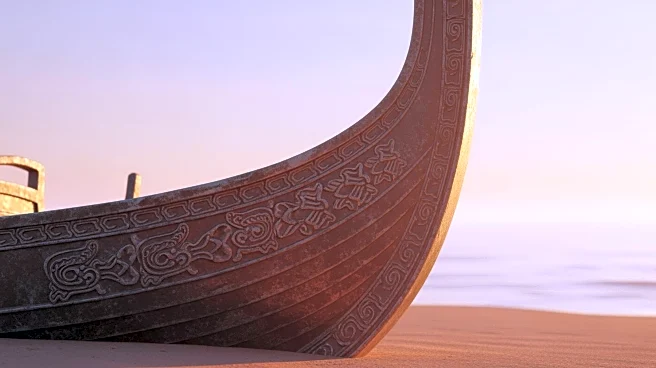

Phoenicia, an ancient civilization located in the Levant region, played a significant role in the history of the Mediterranean. Known for their maritime prowess and trade networks, the Phoenicians left
a lasting impact on the cultures they interacted with. This article explores the historical trajectory of Phoenicia, from its emergence to its eventual decline under foreign rule.
Early Beginnings and Expansion
Phoenicia emerged from the remnants of the Bronze Age Canaanites, maintaining cultural continuity despite the Late Bronze Age collapse. By 1200 BC, the Phoenicians had established themselves as a dominant maritime power, with city-states like Tyre, Sidon, and Byblos leading the way. These city-states were politically independent, each governed by its own king, and they thrived on trade and commerce.
The Phoenicians were renowned for their seafaring skills, which allowed them to establish trade routes across the Mediterranean. They traded goods such as timber, glass, and the famous Tyrian purple dye, which became a symbol of royalty. Their influence extended from Cyprus to the Iberian Peninsula, and they founded colonies in North Africa, including the powerful city of Carthage.
Foreign Domination and Decline
Despite their initial success, the Phoenician city-states eventually fell under the control of larger empires. The Assyrians were the first to exert influence over Phoenicia, demanding tribute and imposing their rule. This was followed by the Babylonians, who besieged Tyre for thirteen years, although the city was not destroyed.
The Persian Empire later incorporated Phoenicia into its vast territories, allowing the city-states a degree of autonomy. However, the Phoenicians were required to contribute to the Persian navy, highlighting their continued importance in maritime affairs. The arrival of Alexander the Great marked a turning point, as he conquered Tyre after a brutal siege, effectively ending Phoenician independence.
Legacy and Cultural Impact
The Phoenicians are perhaps best known for their development of the alphabet, which greatly influenced the writing systems of the Greeks and, subsequently, the Romans. This innovation facilitated communication and record-keeping, contributing to the spread of literacy across the Mediterranean.
Culturally, the Phoenicians left a lasting legacy through their art, religion, and trade practices. Their interactions with other civilizations led to a rich exchange of ideas and goods, shaping the cultural landscape of the ancient world. Despite their decline, the Phoenicians' contributions to maritime trade and communication continued to resonate long after their city-states had fallen.