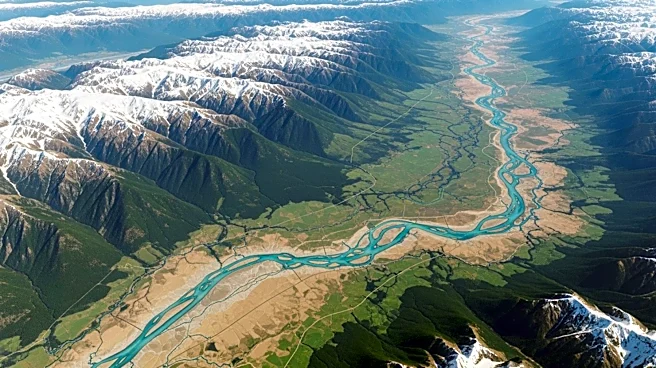










North America is a continent rich in geographic diversity, offering a wide range of natural features and landscapes. From the towering Rocky Mountains to the expansive Great Plains, the continent's geography is as varied as it is vast. This article explores the different geographic regions of North America, highlighting the unique characteristics that define them.
The Mountainous West
The western part of North America is dominated by the Rocky Mountains, a geologically
young range that stretches from Canada down through the United States. These mountains are part of the American Cordillera, a chain of mountain ranges that extends from North America all the way to South America. The Rockies are known for their rugged terrain and stunning vistas, attracting outdoor enthusiasts from around the world.
In addition to the Rockies, the western region includes the Great Basin, a lower area characterized by smaller mountain ranges and low-lying deserts. This area is home to unique ecosystems and diverse wildlife, making it a fascinating region for ecological study. The highest peak in North America, Denali, also known as Mount McKinley, is located in Alaska, further adding to the geographic diversity of the continent.
The Great Plains and Canadian Shield
Stretching from the Gulf of Mexico to the Canadian Arctic, the Great Plains are a vast expanse of flat land that covers much of central North America. This region is known for its agricultural productivity, thanks to its fertile soil and favorable climate. The plains are home to a variety of wildlife, including bison and prairie dogs, which thrive in the open grasslands.
To the northeast lies the Canadian Shield, a raised but relatively flat plateau that covers much of eastern Canada. This area is rich in mineral resources and is characterized by its boreal forests and numerous lakes. The Canadian Shield is one of the oldest geological formations in North America, providing valuable insights into the continent's geological history.
The Eastern Region and Coastal Plains
The eastern part of North America is defined by the Appalachian Mountains, an older range that runs parallel to the Atlantic coast. These mountains are known for their rolling hills and dense forests, offering a stark contrast to the rugged terrain of the Rockies. The Appalachian region is rich in cultural history, with many communities tracing their roots back to early European settlers.
Along the Atlantic seaboard, the coastal plain extends from the northeastern United States down to Florida. This area is characterized by its sandy beaches and marshlands, providing important habitats for a variety of marine and bird species. The coastal plain is also a popular destination for tourists, drawn by its scenic beauty and recreational opportunities.