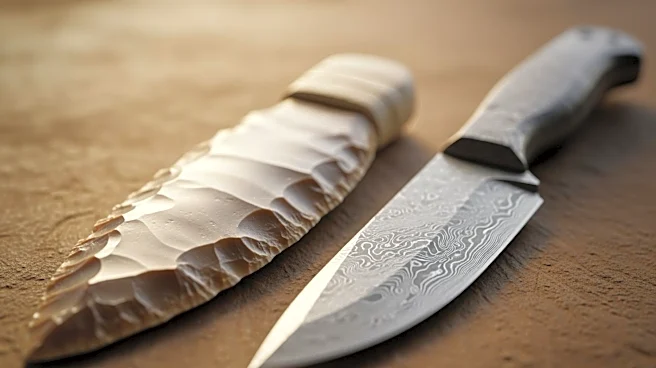

Knives have been an essential tool for humanity since ancient times, evolving significantly in terms of materials used for their construction. From the earliest stone blades to modern titanium and ceramic
innovations, the development of knife materials reflects advancements in technology and metallurgy. This article explores the historical progression of knife materials, highlighting key milestones and innovations that have shaped the tools we use today.
Ancient Beginnings
The history of knives dates back at least 2.5 million years, with the earliest known examples being made from stone, such as flint and obsidian. These materials were readily available and could be shaped into sharp edges, making them ideal for cutting tasks. As human societies evolved, so did their tools, with bone and wood also being used to create knife blades. These early knives were crucial for survival, aiding in hunting, food preparation, and other daily tasks.
With the advent of metallurgy, copper and bronze became popular materials for knife blades. These metals offered greater durability and sharper edges compared to stone, marking a significant advancement in knife technology. The ability to cast and shape metal blades allowed for more intricate designs and improved functionality, setting the stage for further innovations in knife-making.
The Iron and Steel Revolution
The introduction of iron and steel revolutionized knife-making, providing even greater strength and sharpness. Iron knives were more durable than their bronze predecessors, and the development of steel further enhanced these qualities. Steel blades could be sharpened to a finer edge and maintained their sharpness longer, making them highly desirable for both utility and combat purposes.
As steel technology advanced, various alloys were developed to enhance specific properties, such as corrosion resistance and edge retention. High carbon steel became a popular choice for knife blades due to its ability to hold a sharp edge, although it required careful maintenance to prevent rust. Stainless steel, an alloy containing chromium, offered improved resistance to corrosion, making it a preferred material for kitchen knives and other applications.
Modern Innovations
In recent years, knife materials have continued to evolve with the introduction of titanium and ceramic blades. Titanium offers a high strength-to-weight ratio and flexibility, making it suitable for specialized applications. Although it is less hard than steel, titanium blades can be heat-treated to achieve sufficient hardness for cutting tasks.
Ceramic blades, made from zirconium dioxide, are extremely hard and lightweight, maintaining a sharp edge for extended periods without the need for frequent sharpening. However, they are brittle and can break if dropped or twisted, limiting their use to specific applications. These modern materials reflect ongoing advancements in knife technology, providing users with a range of options tailored to their needs.