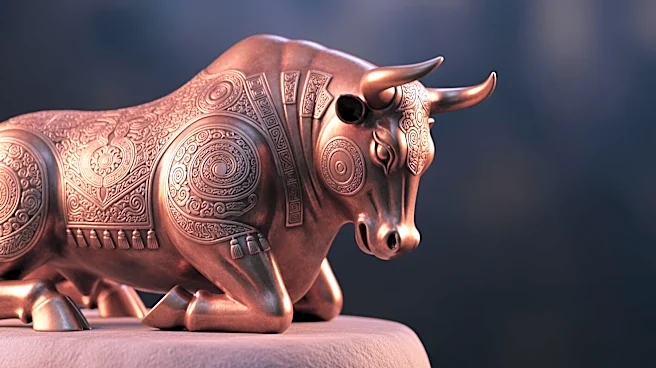






Taurus, the second sign in the zodiac, has a rich historical background that has shaped its significance in astrology. Known for its association with the bull, Taurus has been a prominent symbol in various ancient cultures. This article examines the historical development of Taurus in astrology, highlighting its origins and evolution over time.
Origins of Taurus
The identification of Taurus with the bull dates back to ancient times, with evidence suggesting its presence
in the Upper Paleolithic era. The constellation was recognized by the Mesopotamians as "The Great Bull of Heaven," marking the Sun's position during the vernal equinox in the Early Bronze Age. This association with the equinox underscores Taurus's role in symbolizing renewal and fertility.
In Babylonian astronomy, Taurus was listed as GU 4 .AN.NA, further emphasizing its importance in early astrological systems. The bull's strength and stability made it a fitting symbol for the qualities that Taurus represents, such as persistence and reliability.
Evolution in Astrology
As astrology developed, Taurus maintained its significance as a symbol of strength and stability. The sign's fixed modality reflects its resistance to change, making it a reliable and steadfast presence in the zodiac. Taurus's ruling planet, Venus, adds layers of beauty and sensuality, enhancing its appeal.
The Moon's exaltation in Taurus further emphasizes the sign's nurturing qualities, connecting it to emotions and the physical world. This combination of Earth and Venus creates a sign that values both practicality and pleasure, making Taurus a unique and enduring symbol in astrology.
Taurus's Role in Modern Astrology
In modern astrology, Taurus continues to be a symbol of strength and stability. Its position in the zodiac follows Aries, marking a transition from the initiation of spring to the full bloom of life. This progression reflects the natural cycle of growth and development, with Taurus playing a crucial role in maintaining balance.
Taurus's opposite sign, Scorpio, introduces a dynamic balance between stability and transformation. This opposition highlights the interplay between the physical and emotional realms, offering a comprehensive view of life's complexities.
In conclusion, Taurus's historical significance in astrology is rooted in its association with the bull and its role in symbolizing strength and stability. Its evolution over time has maintained its importance in astrological systems, making it a fascinating subject for astrologers and enthusiasts alike.