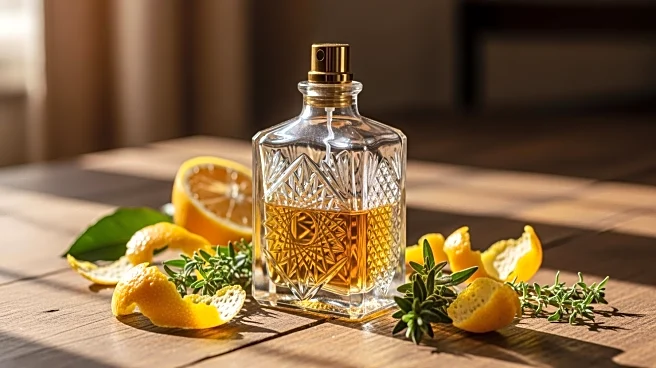



Eau de Cologne, a term now synonymous with light, citrus-based fragrances, has a rich history that dates back to the early 18th century. Originating in Cologne, Germany, this iconic scent was first created by Johann Maria Farina, an Italian perfumer who settled in the city. Over the centuries, Eau de Cologne has evolved from a luxury item for European royalty to a staple in the fragrance industry, influencing countless other scents and becoming a household
name.
The Birth of a Fragrance
In 1709, Johann Maria Farina crafted the first Eau de Cologne, a fragrance that would soon captivate the courts of Europe. Farina, originally from Santa Maria Maggiore in Italy, moved to Cologne and named his creation after his new hometown as a gesture of gratitude for being granted citizenship. The perfume was a sensation, known for its refreshing and light citrus notes, which were a departure from the heavier scents popular at the time. Farina's ability to produce a consistent and high-quality fragrance made Eau de Cologne a coveted item among the European elite.
Farina's Eau de Cologne was not just a perfume; it was a symbol of luxury and sophistication. The fragrance was delivered to nearly all royal houses in Europe, and a single vial was so valuable that it cost half the annual salary of a civil servant. This exclusivity and the unique composition of the scent helped establish Cologne's reputation as a center of perfumery.
The Spread and Imitation of Eau de Cologne
The success of Farina's Eau de Cologne did not go unnoticed. When the French established free trade in Cologne in 1797, many entrepreneurs began to produce their own versions of the fragrance, capitalizing on its popularity. This led to a proliferation of scents labeled as Eau de Cologne, although none could replicate the original's exact formula, which remained a closely guarded secret.
One of the most famous imitations was the Original Eau de Cologne 4711, developed by Wilhelm Mülhens in 1799. This version, named after its location at Glockengasse No. 4711 in Cologne, became one of the oldest continuously produced fragrances in the world. Despite the competition, Farina's original Eau de Cologne maintained its prestige and continued to be produced by his descendants.
Eau de Cologne in Modern Times
Today, Eau de Cologne has become a generic term for light, citrus-based fragrances, often marketed toward men. In American English, the term "cologne" is commonly used to describe men's perfumes, regardless of their actual concentration. This shift in terminology reflects the fragrance's enduring influence and its adaptation to modern consumer preferences.
Despite the changes in the fragrance industry, the legacy of Johann Maria Farina's Eau de Cologne endures. The original formula is still produced by the Farina family, now in its eighth generation, preserving the tradition and history of this iconic scent. Eau de Cologne's journey from a luxury item for royalty to a staple in everyday grooming routines is a testament to its timeless appeal and the ingenuity of its creator.