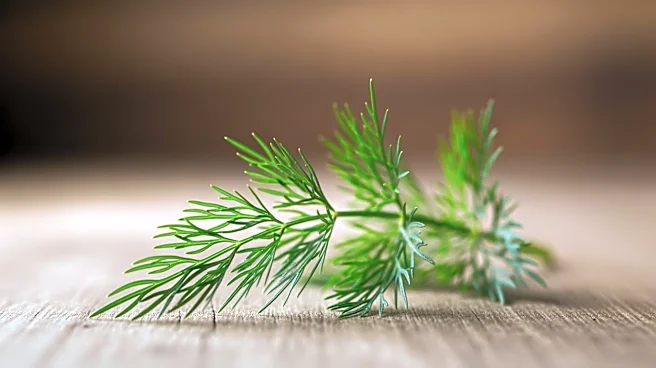







Dill, scientifically known as Anethum graveolens, has a rich history that spans several cultures and centuries. This aromatic herb has been valued not only for its culinary uses but also for its cultural and historical significance. From ancient Egypt to modern-day Europe, dill has played a role in various traditions and practices.
Dill in Ancient Cultures
Dill's history dates back to ancient civilizations, where it was highly regarded for its medicinal and culinary properties.
The Egyptians, Greeks, and Romans all used dill, referring to it as "Anethon," from which its botanical name is derived. The Anglo-Saxon word "dylle" or "dylla," meaning 'to lull,' reflects its soothing properties, which were well-known in the Middle Ages when dill was used as a charm against witchcraft.
In ancient Egypt, dill was found in the tomb of Pharaoh Amenhotep II, dating to around 1400 BC, indicating its importance in Egyptian culture. The Greeks also valued dill, as evidenced by its mention in the writings of Theophrastus, a Greek philosopher and botanist.
Dill's Cultural Impact in Europe
Dill's cultural significance continued into the Middle Ages and beyond. In 812 AD, Charlemagne, King of the Franks and Emperor of the Romans, ordered the extensive cultivation of dill, highlighting its importance as a culinary herb. This decree helped spread the use of dill across Europe, where it became a staple in many regional cuisines.
In Russia, dill is a staple herb, often used in traditional dishes and believed to have antiflatulent properties. This belief even extended to space missions, where Russian cosmonauts recommended its use due to its benefits in confined spaces. In Sweden, dill is a common spice used in various dishes, including crayfish and herring pickles, reflecting its deep-rooted cultural significance.
Modern Uses and Symbolism
Today, dill continues to be a popular herb in many parts of the world. Its use in culinary traditions is well-documented, but it also holds symbolic meaning in some cultures. In the Azores, particularly on the island of Santa Maria, dill is the most important ingredient in the traditional Holy Ghost soup, a dish with cultural and religious significance.
Dill's enduring presence in both historical and modern contexts underscores its versatility and importance. Whether used for its flavor, medicinal properties, or cultural symbolism, dill remains a cherished herb with a rich legacy that continues to influence culinary and cultural practices worldwide.