


Moulage, the art of applying mock injuries for training purposes, plays a crucial role in medical education. By simulating realistic wounds and illnesses, moulage provides students and professionals with valuable hands-on experience. This article explores how moulage is used in medical training and its impact on the effectiveness of education.
Enhancing Realism in Medical Training
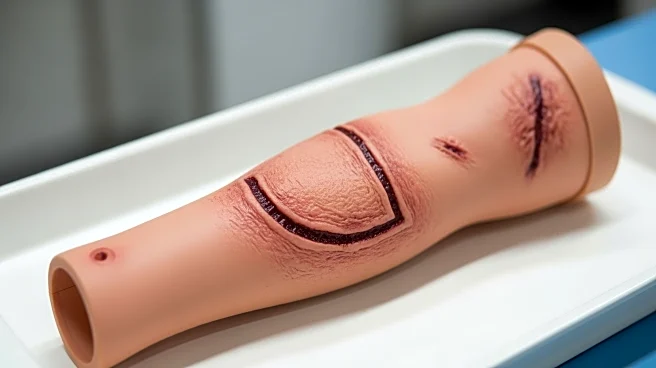
In medical education, the ability to simulate real-life scenarios is essential for effective learning. Moulage
offers a unique opportunity to create realistic training environments by replicating various medical conditions. From diabetic wounds to gunshot injuries, moulage artists use special effects makeup and casting techniques to produce lifelike simulations.
These realistic scenarios allow medical students to practice their diagnostic and treatment skills in a controlled setting. By encountering a wide range of conditions, students can develop their clinical reasoning and decision-making abilities. Moulage also helps bridge the gap between theoretical knowledge and practical application, providing a more comprehensive learning experience.
The Role of Moulage in Simulation-Based Education
Simulation-based education has become an integral part of medical training, and moulage is a key component of this approach. By incorporating moulage into simulations, educators can create immersive scenarios that closely mimic real-world situations. This level of realism enhances participant engagement and helps prepare students for the challenges they will face in their careers.
Moulage is particularly valuable in training emergency response teams and military personnel. By simulating traumatic injuries and high-pressure situations, moulage helps trainees develop the skills needed to respond effectively to emergencies. This type of training is essential for building confidence and competence in high-stakes environments.
Advancements and Future Directions
As technology continues to advance, the field of moulage is evolving to incorporate new techniques and materials. Modern moulage artists use a variety of substances, including latex and silicone, to create realistic effects. These materials allow for greater detail and durability, enhancing the overall quality of simulations.
In addition to traditional moulage techniques, there is growing interest in the use of digital tools, such as augmented reality, to enhance training experiences. These innovations have the potential to further improve the realism and effectiveness of medical education, providing students with even more opportunities to practice their skills.
Moulage remains a vital tool in medical education, offering students and professionals the chance to engage with realistic scenarios and develop their skills. As the field continues to evolve, moulage will likely play an increasingly important role in preparing the next generation of medical professionals for the challenges they will face.