






Andy Warhol's artistic style underwent significant transformations throughout his career, reflecting his evolving interests and the cultural shifts of his time. From his early days as a commercial illustrator to his later work as a leading figure in the Pop Art movement, Warhol's art was characterized by a unique blend of innovation, experimentation, and a keen awareness of contemporary culture.
Early Career and Commercial Illustration
Andy Warhol began his career as a commercial illustrator
in New York City after graduating from the Carnegie Institute of Technology in 1949. His early work was marked by a distinctive style that combined aspects of printmaking and drawing, which quickly gained him recognition in the fashion industry. Warhol's whimsical shoe illustrations appeared in prominent fashion magazines, establishing him as a sought-after commercial artist.
During this period, Warhol developed his "blotted line" technique, which involved transferring ink drawings onto paper to create irregular, variable lines. This method allowed him to produce illustrations with a sense of spontaneity and immediacy, setting the stage for his later work in fine art. Warhol's commercial success provided him with the financial stability to explore new artistic avenues and experiment with different media.
Transition to Pop Art
In the early 1960s, Warhol made a decisive shift from commercial art to fine art, becoming a central figure in the emerging Pop Art movement. This transition was marked by a change in subject matter and technique, as Warhol began to incorporate imagery from consumer culture and mass media into his work. His iconic paintings of Campbell's Soup Cans, Coca-Cola bottles, and Marilyn Monroe challenged traditional notions of art by elevating everyday objects and celebrities to the status of fine art.
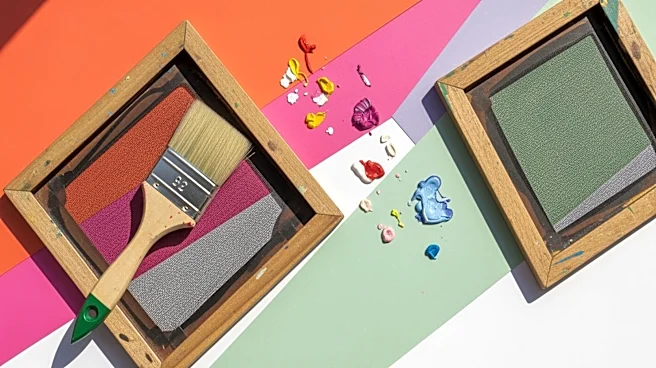
Warhol's use of silkscreen printing was a key innovation that defined his Pop Art style. This technique allowed him to produce multiple versions of his works, blurring the lines between art and commerce. By embracing mass production, Warhol questioned the uniqueness of the art object and highlighted the pervasive influence of consumer culture in contemporary society. His work resonated with the cultural shifts of the 1960s, capturing the zeitgeist of a rapidly changing world.
Later Work and Continued Innovation
In the 1970s and 1980s, Warhol continued to evolve as an artist, exploring new themes and media. He expanded his practice to include commissioned portraiture, creating silkscreen portraits of celebrities and socialites. These works, characterized by their vibrant colors and bold compositions, reflected Warhol's ongoing fascination with fame and the cult of celebrity.
Warhol also ventured into television and publishing, producing shows like Andy Warhol's TV and Andy Warhol's Fifteen Minutes, as well as founding Interview magazine. These endeavors demonstrated his ability to adapt to new media and his keen understanding of the power of mass communication.
Throughout his career, Warhol remained a prolific and innovative artist, constantly pushing the boundaries of what art could be. His willingness to embrace new technologies and techniques, combined with his astute observations of contemporary culture, ensured that his work remained relevant and influential.
In conclusion, Andy Warhol's artistic style evolved significantly over the course of his career, reflecting his diverse interests and the cultural shifts of his time. From his early days as a commercial illustrator to his later work as a leading figure in the Pop Art movement, Warhol's art was characterized by a unique blend of innovation, experimentation, and a keen awareness of contemporary culture. His legacy continues to inspire new generations of artists and creatives, cementing his place as one of the most important figures in 20th-century art.