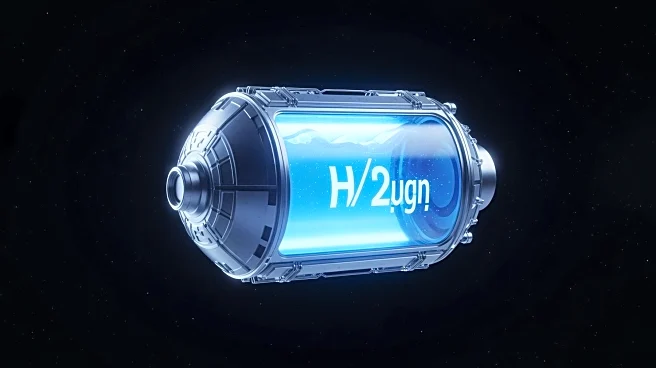




The AS-203 mission, an uncrewed test flight of the Saturn IB rocket, was a significant milestone in space exploration. Launched on July 5, 1966, its primary objective was to study the behavior of liquid hydrogen fuel in orbit. Despite a tank rupture, the mission was deemed a success and provided valuable data that supported the design of the Saturn V's upper stage.
The Objectives of AS-203
The AS-203 mission was specifically designed to test the behavior of liquid hydrogen
fuel in the upper stage of the Saturn IB rocket. This was crucial for the development of the Saturn V, which would later be used in the Apollo program to send astronauts to the Moon. The mission aimed to gather data on how liquid hydrogen behaved in a weightless environment, which was essential for ensuring the reliability and safety of future manned missions.
The mission was part of a series of tests conducted to validate the Saturn IB rocket's capabilities. By focusing on the upper stage, AS-203 played a critical role in understanding the dynamics of liquid hydrogen, a fuel that was relatively new to space exploration at the time. The insights gained from this mission were instrumental in refining the design and operation of the Saturn V's upper stage.
The Launch and Execution
AS-203 was launched from Launch Complex 37 at Cape Canaveral Space Force Station. The mission was uncrewed, allowing engineers to focus solely on the technical aspects of the flight without the added complexity of human safety concerns. The launch proceeded smoothly, and the rocket successfully reached orbit, where the primary experiments were conducted.
During the mission, the behavior of the liquid hydrogen was closely monitored. The data collected provided valuable insights into the fuel's performance in a microgravity environment. This information was crucial for the development of the Saturn V, as it helped engineers understand how to manage the fuel effectively during long-duration spaceflights.
Outcomes and Impact
Despite a tank rupture during the mission, AS-203 was considered a success. The rupture provided unexpected data that further informed the design of the Saturn V's upper stage. The mission's success demonstrated the feasibility of using liquid hydrogen as a rocket fuel, paving the way for its use in future space missions.
The AS-203 mission was a key step in the development of the Apollo program. By validating the use of liquid hydrogen, it contributed to the successful design and operation of the Saturn V rocket, which ultimately enabled humans to land on the Moon. The mission's findings continue to influence rocket design and fuel management in space exploration today.