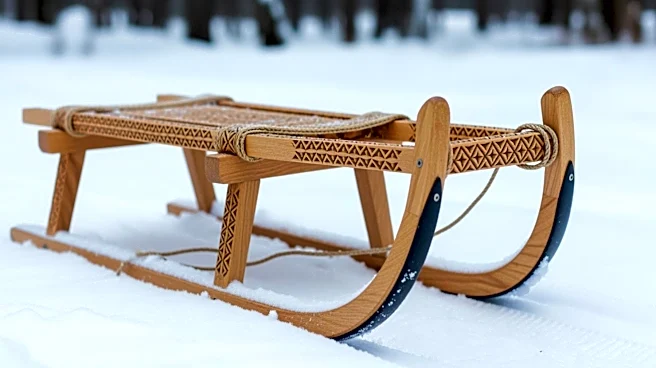







Sleds have been used across the globe, with each region adapting the basic design to suit its unique environment and cultural needs. From the Arctic to the Philippines, sleds have served as vital tools for transport, survival, and recreation. This article delves into the diverse cultural and regional variations of sleds, highlighting how different communities have utilized and adapted them over time.
Arctic and Subarctic Regions
In the Arctic, sleds have been indispensable for
thousands of years. The Inuit people developed the qamutiik, a sled specifically designed for travel on sea ice. This sled's unique construction allowed it to glide smoothly over the uneven and treacherous ice surfaces, making it an essential tool for hunting and transport.
Sled dogs have also played a crucial role in Arctic regions, with their use dating back at least 8,000 years. These dogs were vital for hauling supplies and people across vast, snowy landscapes, where other forms of transport were impractical. The tradition of dog sledding continues today, with events like the Iditarod Trail and the Yukon Quest celebrating this enduring cultural practice.
European and Russian Influence
In Europe, particularly in Russia, sleds have been used for both practical and recreational purposes. During the mid-16th century, sleighs became a popular mode of transport in snow-covered regions, favored by royals and nobility for their speed and elegance. These sleighs were often drawn by horses and used for travel across the snow-covered plains of European Russia and Siberia.
The use of sleds in Russia extended beyond transport, as they were also employed in maritime activities, such as fishing and commuting between islands on ice. This versatility highlights the sled's adaptability to different environments and cultural practices.
Asian and Pacific Variations
In the Philippines, the kangga is a traditional sled drawn by carabao, used for transport over muddy terrain and rice paddy dikes. This sled's design reflects the unique environmental challenges of the region, showcasing how sleds have been adapted to suit local needs.
Similarly, in Lapland, the pulk is a traditional sled used for expeditions, mountain rescue, and cold-weather military units. This sled's lightweight design makes it ideal for hauling equipment and supplies across snowy landscapes, further illustrating the sled's adaptability to different cultural and environmental contexts.
Sleds have been an integral part of human history, with each region adapting the basic design to suit its unique needs and environment. From the Arctic to the Philippines, sleds have served as vital tools for transport, survival, and recreation, reflecting the diverse ways in which cultures have utilized and adapted them over time.