



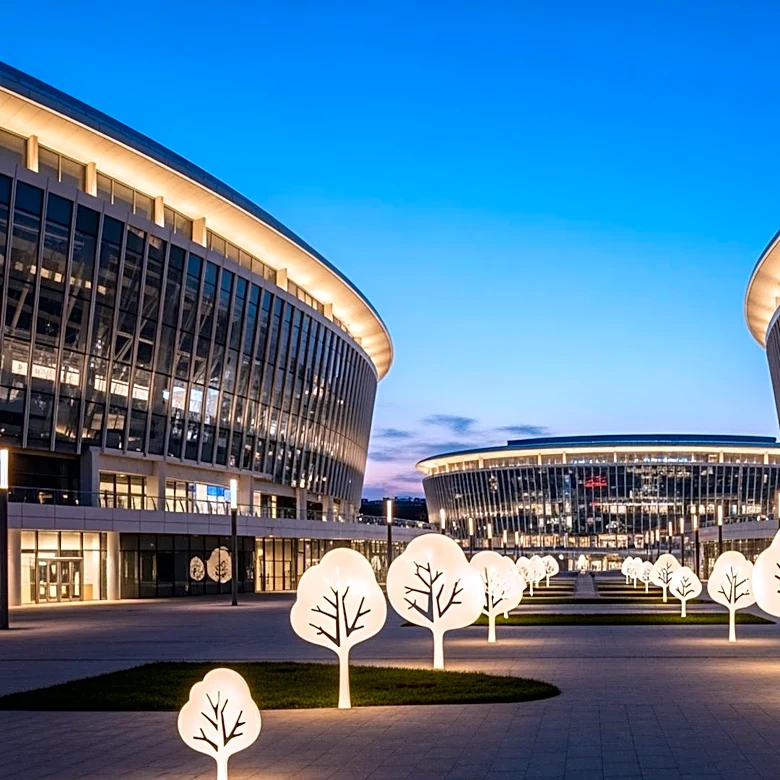



Estadio Universitario, also known as "El Volcán," is a prominent football stadium located in San Nicolás de los Garza, Nuevo León, Mexico. It serves as the home ground for Tigres de la UANL, a team in Mexico's Primera División. Since its opening in 1967, the stadium has undergone several changes and has become a significant landmark in Mexican football. This article explores the history and development of Estadio Universitario, highlighting key milestones
and transformations over the years.
Early Beginnings and Inauguration
The idea for Estadio Universitario originated from the Patronato Universitario, led by Manuel L. Barragán. The construction was supervised by engineers Juvencio Gutiérrez Villarreal and Gerardo Torres, with a budget of 23 million pesos. Initially, the stadium was planned to accommodate 90,000 spectators, but financial constraints led to a reduction in capacity. The stadium was inaugurated on May 30, 1967, with a match between CF Monterrey and Atlético de Madrid, ending in a 1-1 draw. The first goal was scored by Mariano Ubiracy, a Brazilian forward.
Renovations and Capacity Changes
Over the years, Estadio Universitario has seen several renovations to enhance its facilities and accommodate more spectators. In 1977, modifications were made for the Premundial, including the construction of a press box. At that time, the stadium's capacity was increased to 46,799, with a maximum potential of 51,457. After the 1986 FIFA World Cup, further adjustments were made to improve comfort and safety, resulting in a current capacity of 41,615. These changes reflect the stadium's ongoing evolution to meet modern standards.
Technological Advancements and Accessibility
Estadio Universitario has been a pioneer in adopting new technologies and improving accessibility. It was one of the first stadiums in Mexico to implement closed-circuit television and wireless internet. The venue also made significant strides in accessibility, becoming the first to accommodate spectators with special needs, including wheelchair users. The stadium features 220 boxes, 10 luxury suites, and a press box for over 120 journalists. Its large parking area can hold 3,600 vehicles, and it boasts one of the largest screens in Latin America, measuring 12.48 meters wide by 8.60 meters high.
Estadio Universitario's rich history and continuous development have solidified its status as a key venue in Mexican football. From its early days to its current state, the stadium has adapted to changing times while maintaining its iconic presence. As the home of Tigres de la UANL, it remains a beloved site for fans and a symbol of the region's passion for the sport.