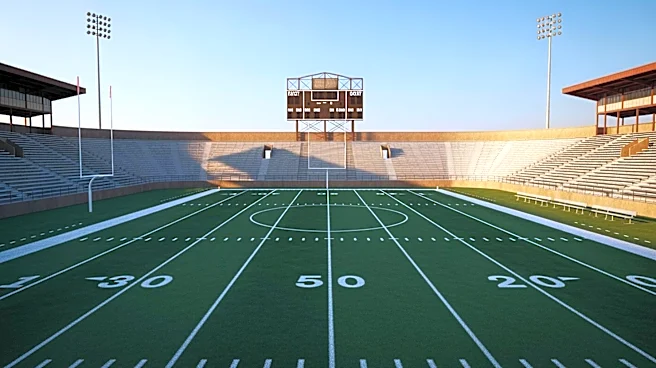









The Cotton Bowl Stadium in Dallas, Texas, has a rich history that reflects its evolution over the decades. From its early days as Fair Park Stadium to its role as a major sports venue, the Cotton Bowl has undergone numerous changes to accommodate the needs of various sports and events. This article explores the key developments that have shaped the stadium's history.
Early Beginnings
The Cotton Bowl was originally constructed in 1930 as Fair Park Stadium, built on the
site of a previous wooden football stadium. The initial structure was completed at a cost of $328,000 and could seat 45,507 spectators. The stadium quickly became a central hub for sports in Dallas, hosting local high school football games and the 1934 Dixie Classic bowl game.
In 1936, the stadium was officially renamed the Cotton Bowl, a name that would become synonymous with college football. The venue hosted the first Cotton Bowl Classic in 1937, an annual college football post-season bowl game that continued to be held there until 2009. The stadium's capacity was expanded in the late 1940s with the addition of a second deck, increasing its seating to accommodate the growing number of fans.
Mid-Century Changes
The mid-20th century saw further developments at the Cotton Bowl. In 1968, chair-backs were installed, reducing the capacity slightly to 72,032. Two years later, in 1970, the stadium transitioned to an AstroTurf surface, reflecting the era's trend towards artificial playing surfaces. This change remained in place until 1993 when natural grass was reinstalled in preparation for the 1994 FIFA World Cup.
The Cotton Bowl also became a home for professional football teams, including the Dallas Cowboys and the Dallas Texans. The Cowboys played at the stadium from 1960 until 1971, when they moved to Texas Stadium. The venue's ability to host both college and professional teams highlighted its versatility and importance in the sports community.
Modern Renovations
In the 2000s, the Cotton Bowl underwent significant renovations to modernize its facilities. A $50 million renovation project was agreed upon in 2006, leading to upgrades in seating, media facilities, and overall infrastructure. The stadium's capacity was expanded to 92,100, making it one of the largest venues in the country.
These renovations were part of an effort to maintain the Cotton Bowl's status as a premier sports venue. The improvements ensured that the stadium could continue to host major events, including the annual Red River Rivalry between the University of Texas and the University of Oklahoma.
The Cotton Bowl's evolution over the years reflects its adaptability and enduring significance in the world of sports. From its early days as a local football venue to its role in international events like the FIFA World Cup, the stadium has remained a vital part of Dallas's sports landscape.