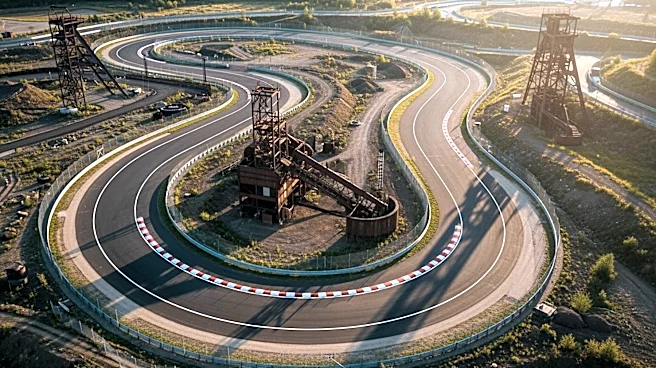

Lausitzring, located near Klettwitz in Brandenburg, Germany, is a testament to transformation and innovation. Originally conceived in the late 1980s, the site was once a massive open coal mine pit. Over
the years, it has evolved into a premier racing venue, hosting a variety of high-profile motor racing events. This article delves into the fascinating journey of Lausitzring, from its industrial roots to its current status as a hub for motorsport enthusiasts.
From Coal to Cars: The Early Vision
The idea to convert the coal mine into a race track dates back to 1986, during the era of communist East Germany. The vision was to repurpose the vast open pit into a racing facility, a concept that lay dormant until the late 1990s. With the fall of the Berlin Wall and the subsequent increase in traffic on the AVUS in Berlin, the need for a new racing venue became apparent. Construction of the EuroSpeedway Lausitz, as it was initially named, began on June 17, 1998.
The transformation from a coal mine to a race track was not just a physical change but also a symbolic one. It represented a shift from the industrial past to a future focused on sports and entertainment. The project was ambitious, aiming to create a state-of-the-art facility that could host international racing events and attract visitors from around the world.
A New Era of Racing Begins
Lausitzring officially opened on August 20, 2000, marking the beginning of a new era in German motorsport. The track quickly gained recognition for its unique features, including a high-speed oval race track, the only one of its kind in continental Europe. This oval, reminiscent of tracks used by NASCAR and IndyCar in the United States, added a distinctive element to the European racing scene.
The venue soon became a regular host for major racing series, including the German Touring Car Championship (DTM) and the Superbike World Championship. The tri-oval track also saw action from the CART series, with notable races like the German 500. These events helped establish Lausitzring as a key player in the international racing circuit.
Challenges and Changes
Despite its success, Lausitzring faced challenges in its early years. The track witnessed several serious accidents, including a tragic incident in 2001 that resulted in the death of former Formula One driver Michele Alboreto. These events highlighted the inherent risks of motorsport and the need for stringent safety measures.
In 2017, the facility underwent a significant change in ownership when it was sold to Dekra, a vehicle inspection company. Dekra announced plans to modernize the track and use it as a proving ground for road car innovations, particularly in autonomous driving. While this shift raised concerns about the future of public racing events, Dekra assured that the track would remain open for such activities, albeit organized by other companies.
Lausitzring's journey from a coal mine to a racing landmark is a story of transformation and adaptation. It stands as a symbol of how spaces can be reimagined and repurposed, reflecting broader changes in society and industry.