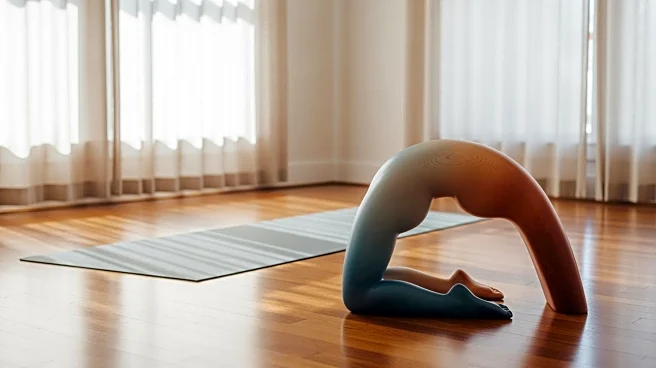


Kurmasana, or Tortoise Pose, is a unique yoga posture that challenges both flexibility and concentration. This asana is a forward-bending pose that mimics the protective nature of a tortoise retreating into its shell. While it may seem daunting at first, understanding the technique and exploring its variations can make Kurmasana an enriching part of your yoga practice.
Technique of Kurmasana
To perform Kurmasana, begin by sitting with your legs outstretched and feet as wide
apart as possible. Slightly bend your knees, keeping your heels in contact with the floor. Lean forward from the hips, sliding your hands under your knees. As you continue to lean forward, slide your arms sideways and backward under your knees until your elbows are near the back of your knees.
The next step involves pushing your heels forward and straightening your legs as much as possible. Aim to bring your forehead or chin to touch the floor. This forward bend requires a combination of flexibility and strength, engaging the core and leg muscles. Finally, bring your arms around your back to interlock your hands under your buttocks, completing the pose.
Variations of Kurmasana
Kurmasana has several variations that can be practiced to deepen the pose or accommodate different levels of flexibility. One such variation is Supta Kurmasana, or Sleeping Tortoise Pose. In this version, the forehead remains on the floor, the feet are crossed behind the head, and the arms reach around the legs with hands clasped behind the back. This variation intensifies the stretch and requires greater flexibility in the hips and shoulders.
Another variation is Uttana Kurmasana, or Upside-Down Tortoise Pose. In this pose, the arms are threaded through the crossed legs, similar to Kukkutasana (Cockerel Pose), with the back on the ground and the palms of the hands on the neck. This variation challenges balance and coordination, offering a different perspective on the traditional Kurmasana.
Benefits and Challenges
Practicing Kurmasana and its variations offers numerous benefits. The pose stretches the spine, shoulders, and hips, promoting flexibility and relieving tension. It also encourages introspection and focus, as the forward bend naturally draws attention inward.
However, Kurmasana can be challenging, especially for beginners. It requires patience and gradual progression to avoid strain or injury. Practitioners are encouraged to listen to their bodies and modify the pose as needed, using props like yoga blocks or straps to support the posture.
By mastering the technique and exploring variations, Kurmasana can become a rewarding part of your yoga journey, enhancing both physical and mental well-being.