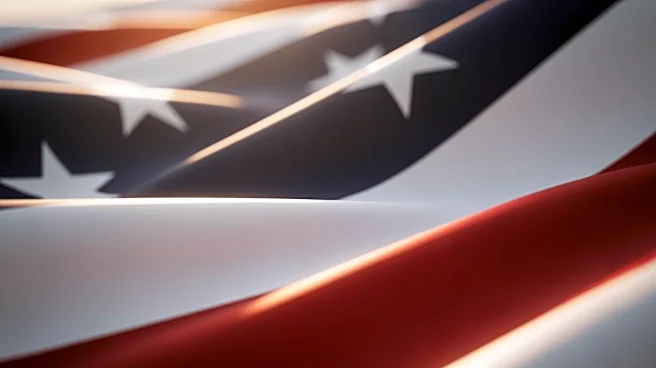







The flag of the United States is not just a piece of fabric; it is a symbol rich with meaning and significance. Each element of the flag, from its colors to its stars and stripes, carries a message about the values and history of the nation. Understanding these symbols helps to appreciate the flag's role in American culture and identity.
Colors and Their Meanings
The colors of the U.S. flag—red, white, and blue—were chosen for their symbolic meanings. According to Charles Thomson,
who helped design the Great Seal of the United States, white signifies purity and innocence, red represents hardiness and valor, and blue stands for vigilance, perseverance, and justice. These colors were intended to reflect the ideals and virtues of the new nation.
The use of these colors was influenced by classical heraldry, where they have long been associated with specific qualities. The choice of colors also connects the flag to the Great Seal, reinforcing the idea that the United States is a nation founded on principles of justice and virtue.
Stars and Stripes
The stars and stripes on the flag are powerful symbols of unity and independence. The thirteen stripes represent the original colonies that declared independence from Great Britain, while the stars symbolize the states united under one nation. The arrangement of stars has varied over time, but the current design features fifty stars, representing each state in the Union.
The stars are arranged in a constellation, a concept that was introduced in the Flag Resolution of 1777. This design was meant to symbolize a new constellation in the sky, representing the emergence of the United States as a sovereign nation among other powers.
Cultural Impact and Reverence
The U.S. flag is revered as a symbol of Americanism and is displayed on many occasions, from public buildings to private residences. It is a common motif on clothing, decals, and other items, reflecting its status as a widely recognized symbol of the United States.
Reverence for the flag has reached a religion-like fervor at times, with some proposing the idea of vexillolatry, or flag worship. Despite attempts to ban flag desecration, the practice remains protected as free speech under the First Amendment, highlighting the flag's role as a symbol of freedom and democracy.
The flag's symbolism and significance continue to evolve, reflecting the changing values and identity of the United States. It remains a powerful emblem of the nation's history, ideals, and aspirations.