


The concept of slipstream is crucial in the field of aviation, particularly when it comes to understanding the dynamics of aircraft with rotating propellers. A specific type of slipstream, known as the spiral slipstream, plays a significant role in the behavior of aircraft during flight. This article delves into the mechanics of spiral slipstream, its effects on aircraft, and how engineers counteract these effects to ensure stable flight.
The Mechanics of Spiral Slipstream
Spiral slipstream,
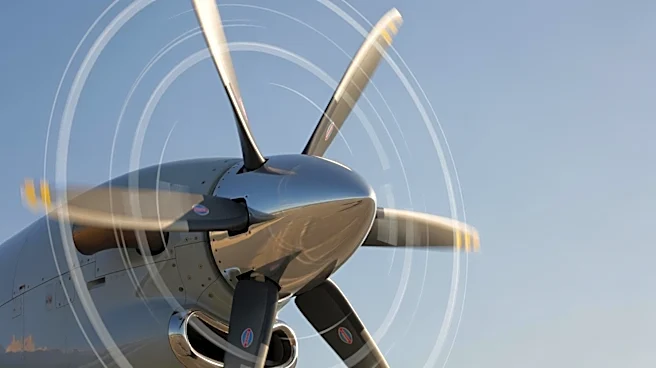
also referred to as propwash or spiraling slipstream, is a phenomenon that occurs behind a rotating aircraft propeller. As the propeller spins, it creates a spiral-shaped wake of air that flows around the aircraft's fuselage. This spiraling motion of air is a result of the propeller's rotation, which imparts a rotational force to the air, causing it to move in a helical pattern around the aircraft.
The spiral slipstream is most noticeable in aircraft with a centerline tractor configuration, where the propeller is mounted at the front of the aircraft. In such configurations, the slipstream can cause the aircraft to yaw, or rotate, to the left, especially at low speeds and full throttle. This yawing effect is due to the slipstream exerting a force on the aircraft's tail fin, pushing it to the right and causing the nose to turn left.
Effects on Aircraft Performance
The presence of a spiral slipstream can significantly impact an aircraft's performance, particularly during takeoff and low-speed maneuvers. The yawing tendency caused by the slipstream can make it challenging for pilots to maintain a straight path, requiring constant adjustments to the aircraft's controls. This effect is more pronounced in aircraft with clockwise-rotating propellers, as the slipstream's force is directed in a way that exacerbates the yawing motion.
To mitigate the effects of spiral slipstream, some aircraft are designed with the vertical stabilizer, or tail fin, slightly offset from the centerline. This offset creates an opposing force that counteracts the slipstream's influence, helping to maintain directional stability. However, this solution is typically optimized for a specific speed, often the cruising speed, and may not be as effective at other speeds.
Engineering Solutions and Innovations
In addition to offsetting the vertical stabilizer, engineers have developed other solutions to address the challenges posed by spiral slipstream. One such solution is the use of differential thrust, where the power output of the engines is adjusted to counteract the yawing effect. This technique is particularly useful in multi-engine aircraft, where the engines can be controlled independently to achieve the desired balance.
Another approach involves the design of propellers and airframes that minimize the impact of slipstream. By optimizing the shape and angle of the propeller blades, engineers can reduce the intensity of the slipstream and its effects on the aircraft. Additionally, advancements in computer modeling and simulation have allowed for more precise analysis and testing of slipstream dynamics, leading to more effective design solutions.
In conclusion, the spiral slipstream is a critical factor in the design and operation of aircraft with rotating propellers. Understanding its mechanics and effects is essential for ensuring safe and efficient flight. Through innovative engineering solutions, the aviation industry continues to address the challenges posed by this complex aerodynamic phenomenon.