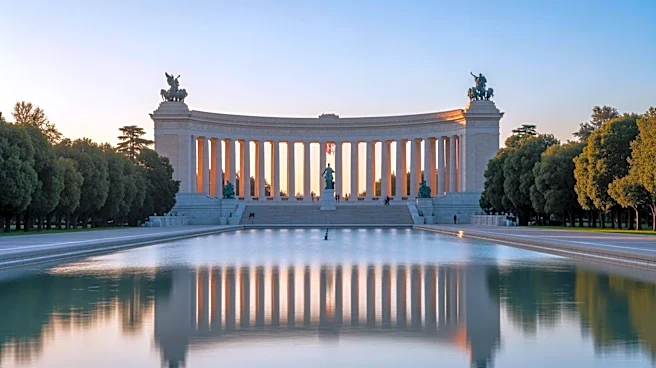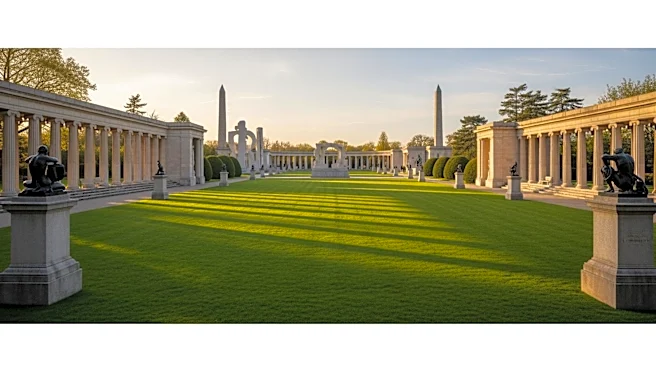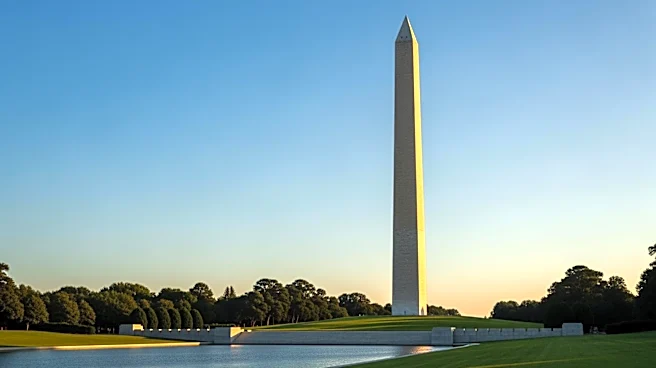







The Washington Monument stands as a towering tribute to George Washington, the first President of the United States, and symbolizes the unity and strength of the nation. Completed in 1884, this 555-foot tall obelisk is located on the National Mall in Washington, D.C., and has been a focal point for American pride and patriotism. Despite challenges such as natural disasters, the monument remains a steadfast emblem of the country's enduring values.
Cultural Significance
The Washington Monument is more than just a physical structure; it represents the ideals and aspirations of the United States. As a tribute to George Washington, it honors his leadership and the foundational role he played in the nation's history. Washington's legacy as a unifying figure is encapsulated in the monument's design, which reflects the strength and resilience of the American spirit.
Throughout its history, the monument has been a site for national celebrations and gatherings, serving as a backdrop for events that bring Americans together. Its presence on the National Mall, surrounded by other iconic landmarks, underscores its importance as a symbol of national unity. The monument's towering height and simple elegance convey a sense of stability and permanence, qualities that are deeply valued in American culture.
Historical Challenges
The Washington Monument has faced several challenges since its completion, including damage from an earthquake in 2011. This natural disaster highlighted the monument's vulnerability but also demonstrated the nation's commitment to preserving its historical landmarks. The monument was closed for repairs and reopened in 2019, showcasing the dedication to maintaining its structural integrity.
The monument's history is marked by periods of construction and restoration, reflecting the evolving nature of American society. Each phase of its development has been met with public interest and support, illustrating the monument's role as a cherished national symbol. The efforts to repair and restore the monument after the earthquake are a testament to the collective resolve to uphold the values it represents.
Symbol of Progress
As the tallest structure in the world until 1889, the Washington Monument was a marvel of engineering and design. Its construction marked a significant achievement in American architecture and demonstrated the nation's ability to innovate and progress. The monument's design, inspired by ancient obelisks, connects the United States to historical traditions while also showcasing modern advancements.
The monument's prominence on the National Mall serves as a reminder of the country's journey from its founding to its present-day status as a global leader. It stands as a beacon of hope and progress, encouraging future generations to strive for excellence and unity. The Washington Monument continues to inspire Americans and visitors from around the world, embodying the enduring spirit of the nation.