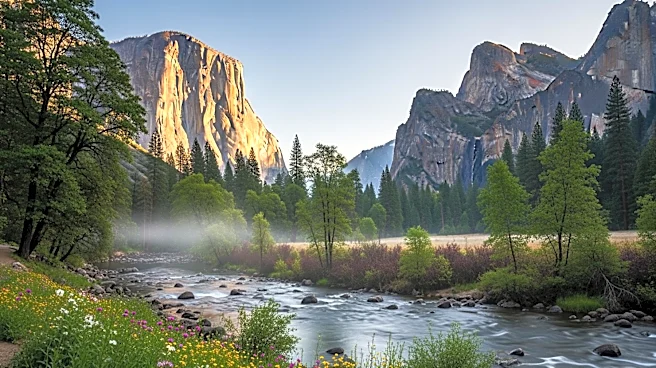








Yosemite Valley, a stunning glacial valley in California's Sierra Nevada, is not only a natural wonder but also a site of rich cultural history. From its early Native American inhabitants to its role in the conservation movement, Yosemite Valley has played a significant part in shaping the cultural landscape of the United States.
Native American Heritage
For thousands of years, Yosemite Valley was home to the Ahwahnechee, a band of the Southern Sierra Miwok. These Native Americans
called the valley "Ah-wah-nee" and lived in harmony with the land, utilizing its resources for sustenance and cultural practices. The Ahwahnechee were skilled hunters and gatherers, relying on the valley's abundant wildlife and plant life for food.
The Ahwahnechee also practiced cultural burning, using controlled fires to manage the landscape. This practice helped maintain the valley's meadows and oak woodlands, ensuring a steady supply of acorns, a staple of their diet. The cultural heritage of the Ahwahnechee is an integral part of Yosemite Valley's history, and their legacy continues to be honored today.
The Birth of Conservation
Yosemite Valley played a pivotal role in the early conservation movement in the United States. In 1864, President Abraham Lincoln signed the Yosemite Grant Act, granting the valley and the Mariposa Grove of giant sequoias to the state of California for preservation. This was the first time in history that a government set aside scenic lands for public enjoyment, laying the groundwork for the national park system.
The efforts of individuals like Galen Clark and Frederick Law Olmsted were instrumental in advocating for the preservation of Yosemite Valley. Their work helped raise awareness of the valley's natural beauty and the need to protect it for future generations. Yosemite Valley's designation as a national park in 1890 further solidified its place in the history of conservation.
A Destination for All
Today, Yosemite Valley is a beloved destination for millions of visitors each year. Its stunning landscapes and rich cultural history draw people from around the world, eager to experience its beauty and learn about its past. The valley's role as a center for rock climbing and outdoor recreation has also contributed to its cultural significance.
Yosemite Valley's cultural history is a testament to the enduring relationship between people and nature. From its Native American roots to its role in the conservation movement, the valley continues to inspire and captivate those who visit. Its legacy as a cultural and natural treasure is one that will be cherished for generations to come.