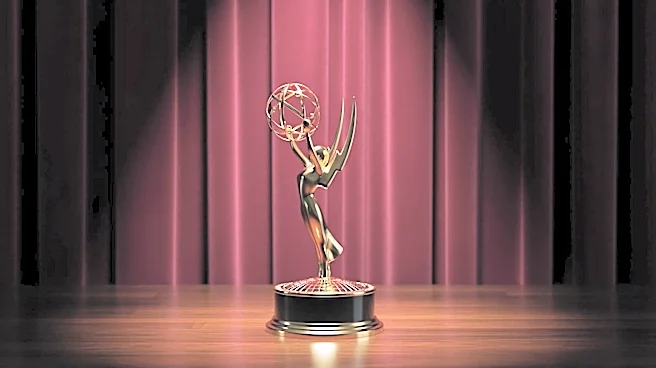







The 26th Primetime Emmy Awards, held on May 28, 1974, introduced a new concept that would stir debate and controversy: the Super Emmys. These awards were intended to add a new layer of competition to the traditional Emmy categories, but they were met with mixed reactions from the television community.
What Were the Super Emmys?
The Super Emmys were a set of 14 individual awards introduced at the 26th Primetime Emmy Awards. The idea was to have winners of traditional Emmy categories
compete against their genre counterparts. For example, the winner of the Outstanding Comedy Series would compete against the winner of the Outstanding Drama Series for a Super Emmy in the "Series" category.
This format required that traditional Emmy winners be announced well before the ceremony, allowing time for the Super Emmy voting process. The intention was to create a more competitive and exciting awards show, but the execution left much to be desired.
Criticism and Backlash
The introduction of the Super Emmys was not well-received by everyone. Several members of the Television Academy, including notable winners like Alan Alda and Mary Tyler Moore, were vocal in their opposition. They argued that comparing different genres, such as comedy and drama, was inherently unfair.
During their acceptance speeches, both Alda and Moore criticized the concept. Moore likened it to comparing "apples to oranges," while Alda took it a step further, saying it was like comparing "apples to oranges to Volkswagens." Their comments highlighted the difficulty in evaluating diverse genres on a single scale, a challenge that the Super Emmys failed to address.
The End of the Super Emmys
The backlash against the Super Emmys was significant enough that the awards were never presented again. The concept was quietly dropped the following year, and the traditional Emmy categories continued without the added competition.
The Super Emmys serve as a reminder of the complexities involved in award shows and the importance of fair evaluation criteria. While the idea was innovative, it ultimately did not resonate with the television community or the public.
In retrospect, the Super Emmys of 1974 are a fascinating footnote in the history of the Emmy Awards. They highlight the challenges of balancing innovation with tradition and the need for thoughtful consideration when introducing new elements to established institutions.