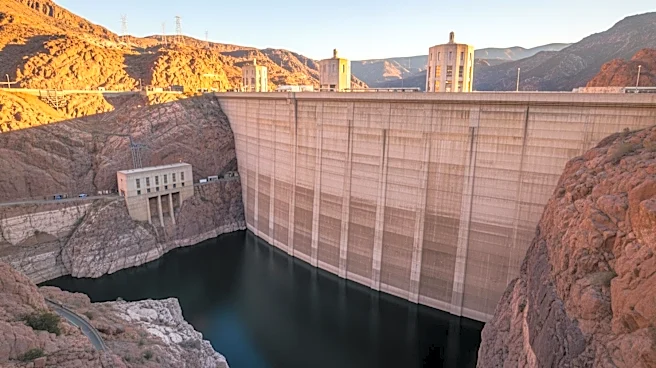







Hoover Dam is not just an engineering marvel; it is a symbol of American innovation and resilience. Constructed during the Great Depression, the dam represented hope and progress at a time when the nation was grappling with economic despair. Its completion marked a turning point in the development of the American West, providing water, power, and a sense of pride to a struggling nation. The dam's cultural and symbolic significance extends beyond its
practical functions, embodying the spirit of a nation determined to overcome adversity.
A Beacon of Hope During the Great Depression
The construction of Hoover Dam began in 1931, at the height of the Great Depression. With unemployment rates soaring and economic activity at a standstill, the dam project provided much-needed jobs and economic stimulus. Thousands of workers flocked to the site, eager for employment and the opportunity to contribute to a project of national importance.
The dam's construction was a massive undertaking, requiring innovative engineering solutions and the labor of thousands. It was a testament to the ability of the United States to mobilize resources and manpower to achieve a common goal. The project not only provided jobs but also instilled a sense of purpose and pride in those who worked on it. For many, the dam symbolized the potential for recovery and progress, a beacon of hope in a time of uncertainty.
An Icon of American Engineering
Hoover Dam quickly became an icon of American engineering prowess. Its sheer size and scale were unprecedented, and its successful completion demonstrated the capabilities of American engineers and workers. The dam was the tallest in the world at the time, and its construction required overcoming numerous challenges, from diverting the Colorado River to pouring millions of cubic yards of concrete.
The dam's design and construction were widely publicized, capturing the imagination of the American public. It was featured in newspapers, magazines, and newsreels, becoming a symbol of American ingenuity and determination. The dam's completion was celebrated as a triumph of human achievement, a testament to the power of innovation and collaboration.
Lasting Impact and Legacy
The impact of Hoover Dam extends far beyond its initial construction. It transformed the American West, providing water and power to millions of people in Nevada, Arizona, and California. The dam's reservoir, Lake Mead, became a vital resource for agriculture, industry, and urban development, supporting the growth of cities like Las Vegas and Los Angeles.
Hoover Dam also became a major tourist attraction, drawing millions of visitors each year. Its Art Deco design and monumental scale continue to captivate and inspire, serving as a reminder of the nation's ability to achieve great things. The dam's legacy is one of progress and possibility, a symbol of what can be accomplished through vision, determination, and hard work.
In conclusion, Hoover Dam is more than just a structure; it is a symbol of American innovation and progress. Its construction during the Great Depression provided hope and jobs to a struggling nation, while its completion showcased the capabilities of American engineering. Today, the dam continues to serve as a vital resource and a source of inspiration, a testament to the enduring spirit of the United States.