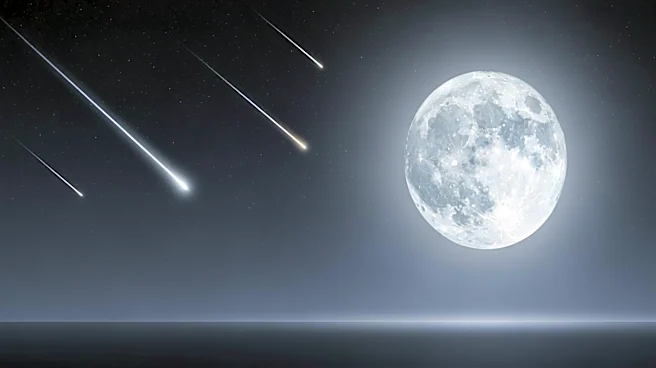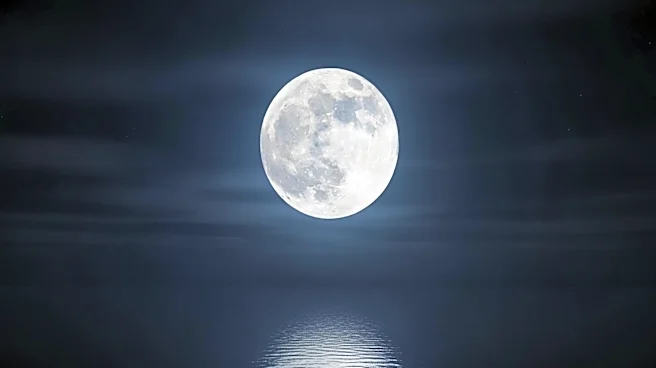

The full moon is a fascinating astronomical event that occurs when the Moon is fully illuminated as seen from Earth. This phase is a result of the Moon's position in its orbit, where it is directly opposite
the Sun, with Earth in between. Understanding the science behind the full moon provides insight into the mechanics of our solar system and the Moon's influence on Earth.
The Astronomical Alignment
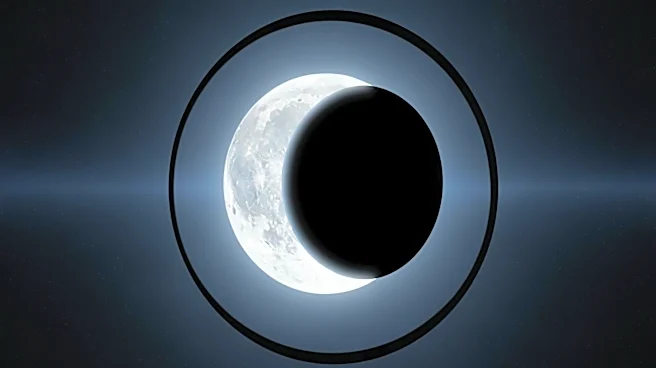
The full moon occurs when the ecliptic longitudes of the Sun and Moon differ by 180 degrees, placing Earth directly between the two celestial bodies. This alignment allows the entire near side of the Moon to be illuminated by the Sun, creating the bright, circular appearance we see in the night sky. The full moon is part of the lunar cycle, which lasts approximately 29.5 days, known as a synodic month.
Due to the Moon's elliptical orbit, the timing of the full moon can vary slightly, with the phase lasting only an instant when the Moon is exactly opposite the Sun. However, the full moon is often thought of as an event lasting an entire night, even though it is technically full for only a brief moment.
The Impact of the Full Moon on Earth
The full moon has a noticeable impact on Earth, particularly in terms of tides. The gravitational pull of the Moon, combined with that of the Sun, creates higher tides known as spring tides during the full moon phase. These tides are more pronounced due to the alignment of the Sun, Earth, and Moon, resulting in a stronger gravitational pull on Earth's oceans.
In addition to its effect on tides, the full moon has been the subject of various scientific studies exploring its potential influence on human behavior and natural phenomena. While some studies suggest a correlation between the full moon and certain behaviors, such as increased hospital admissions or crime rates, the evidence remains inconclusive.
Observing the Full Moon
For astronomers and skywatchers, the full moon presents both opportunities and challenges. While its brightness can hinder the observation of other celestial objects, the full moon offers a chance to study the Moon's surface features in detail. The lack of shadows during this phase allows for a clear view of the lunar maria and highlands.
Despite its brightness, the full moon remains a captivating sight in the night sky, drawing the attention of both amateur and professional astronomers. Its regular appearance and predictable cycle make it a reliable subject for observation and study, contributing to our understanding of the Moon and its role in the solar system.