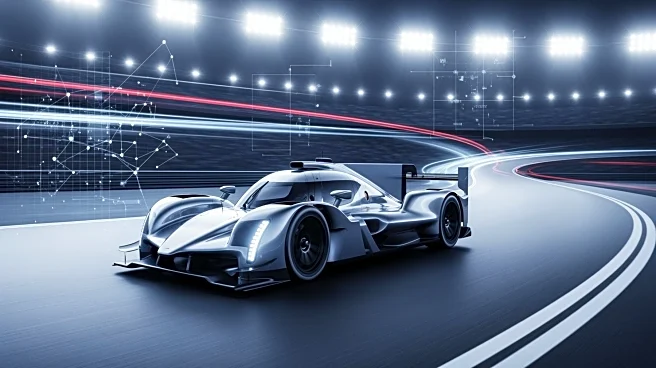



The world of endurance racing has seen significant changes over the years, with the introduction of new regulations that aim to enhance competition and innovation. One of the most notable developments in recent times is the Le Mans Daytona h (LMDh) regulations, which were jointly created by the International Motor Sports Association (IMSA) and the Automobile Club de l'Ouest (ACO). These regulations have reshaped the landscape of endurance racing,
offering a fresh approach to the sport's top classes.
The Birth of LMDh Regulations
The LMDh regulations were announced on January 24, 2020, during a joint press conference held by IMSA and ACO at the Daytona International Speedway. This marked a significant shift in the endurance racing scene, as the LMDh regulations were designed to supersede the existing Daytona Prototype International (DPi) cars. The goal was to create a unified set of rules that would allow both LMDh and Le Mans Hypercar (LMH) entries to compete in the top class of both the FIA World Endurance Championship (WEC) and IMSA's premier series.
The introduction of LMDh regulations was planned to first take place in Europe starting from September 2021, with a North American debut at the 2022 Rolex 24 at Daytona. This strategic rollout was intended to ensure a smooth transition and integration of the new regulations across different racing series.
Technical Specifications and Innovations
The LMDh regulations brought several technical innovations to the forefront of endurance racing. Initially, manufacturers were allowed to build their own hybrid systems, but this was later changed to a spec 50 kW (67 hp) hybrid system. The regulations also specified a car weight of 1,030 kg (2,270 lb) and a peak combined power of 500 kW (670 hp) from the engine and hybrid system.
The gearbox hybrid system is supplied by Xtrac, with an integrated motor generator unit from Bosch and batteries from Williams Advanced Engineering. Chassis suppliers include Dallara, Ligier, Multimatic, and Oreca, ensuring a diverse range of options for manufacturers.
The Impact on Endurance Racing
The debut of LMDh cars in the 2023 IMSA SportsCar Championship at the 24 Hours of Daytona marked a new era in endurance racing. With four different manufacturers entering a total of nine cars, the LMDh regulations have fostered increased competition and innovation. The regulations have also paved the way for LMDh cars to compete in the FIA World Endurance Championship, further solidifying their role in the sport.
As endurance racing continues to evolve, the LMDh regulations represent a significant milestone in the pursuit of performance, sustainability, and global competition. The collaboration between IMSA and ACO has set a new standard for the sport, promising exciting developments in the years to come.