





Marine thrusters are pivotal in the maritime industry, providing vessels with enhanced maneuverability and propulsion capabilities. These devices come in various forms, each tailored to specific operational needs, from maneuvering in tight spaces to providing efficient propulsion over long distances.
Types of Marine Thrusters
Marine thrusters are diverse, with several types designed for different applications. Common types include screw propellers, Voith-Schneider propellers, waterjets,
ducted propellers, tunnel bow thrusters, and stern thrusters. Each type offers unique advantages, such as the ability to rotate 360 degrees for azimuth thrusters, which are particularly useful for precise maneuvering.
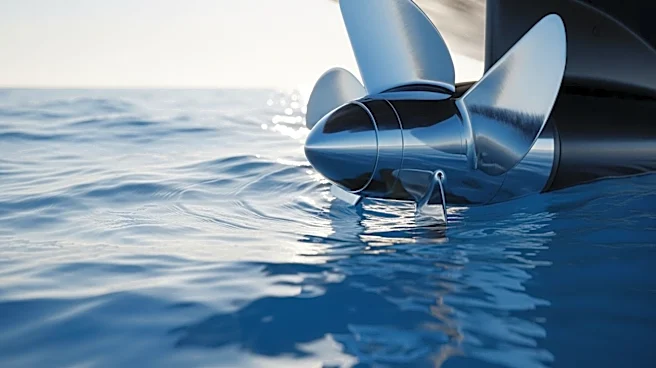
Azimuth thrusters are a popular choice for vessels requiring versatile propulsion. They can rotate fully on a vertical axis, allowing for thrust in any direction. This flexibility is invaluable for docking and navigating through congested waters. Rim-driven thrusters, another innovative type, feature blades mounted on an outer ring, offering a compact design and reduced noise emissions.
Maneuvering Thrusters
Maneuvering thrusters, including bow and stern thrusters, are essential for precise vessel control. These thrusters are typically smaller than main propulsion units and are used for fine adjustments in position. Bow thrusters, located at the front of the vessel, and stern thrusters, at the rear, enable lateral movement, making docking and undocking operations smoother.
Tunnel thrusters are a common form of maneuvering thruster, built into the hull below the waterline. They create thrust by expelling water through a tunnel, allowing the vessel to turn without forward motion. This capability is crucial for avoiding obstacles and achieving precise positioning, especially in challenging environments.
Propulsion Thrusters
Propulsion thrusters provide the main driving force for marine vessels, offering an alternative to traditional propellers. Azimuth thrusters are a prominent example, capable of delivering thrust in multiple directions. This versatility comes at the cost of complexity and lower efficiency compared to conventional propellers, but it offers significant advantages in terms of maneuverability.
The choice between thrusters and traditional propellers depends on the vessel's operational requirements. While propellers are efficient for straightforward propulsion, thrusters offer greater customization and adaptability, making them suitable for vessels that require frequent changes in direction or speed.