
Geometry played a pivotal role in the architectural and engineering feats of Ancient Egypt. This article explores how geometric principles were applied in the construction of monumental structures, such
as pyramids and temples, and the mathematical understanding that underpinned these achievements.
Geometric Principles in Pyramid Construction
The construction of pyramids is one of the most iconic examples of Ancient Egyptian architecture, and geometry was central to their design. The Egyptians understood how to calculate the surface area and volume of pyramids, which was crucial for ensuring stability and precision in construction.
Problem 56 of the Rhind Mathematical Papyrus discusses the concept of geometric similarity, specifically the ratio of run to rise, known as the seqed. This formula was essential for building pyramids, as it allowed architects to determine the slope of the pyramid's sides accurately.
Engineering Applications of Geometry
Beyond pyramids, geometry was applied in various engineering projects throughout Ancient Egypt. The Moscow Mathematical Papyrus includes problems related to calculating the volume of a frustum, a truncated pyramid, demonstrating the Egyptians' ability to work with complex geometric shapes.
The Papyrus Wilbour, from the time of Ramesses III, records land measurements, indicating the use of geometry in surveying and resource management. The ability to calculate areas and volumes was essential for managing agricultural land and ensuring efficient use of resources.
Geometry in Everyday Life
Geometry was not limited to grand architectural projects; it also played a role in everyday life. The workers' village of Deir el-Medina provides evidence of geometric calculations used in quarrying tombs, where volumes of dirt removed were meticulously recorded.
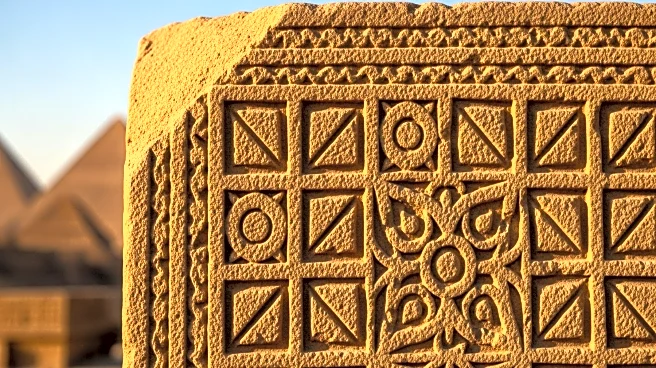
The use of geometry extended to the design of tools and artifacts, where precise measurements were necessary for functionality and aesthetics. The Egyptians' understanding of geometric principles allowed them to create intricate designs and patterns that are still admired today.
The application of geometry in Ancient Egyptian architecture and engineering showcases the civilization's advanced mathematical knowledge and its ability to translate abstract concepts into practical solutions. This legacy of geometric innovation continues to influence modern architecture and engineering, highlighting the enduring impact of Ancient Egyptian mathematics.