



The dandy horse, invented by Karl Drais in 1817, marked the beginning of a new era in human-powered transportation. Known initially as the Laufmaschine, this two-wheeled vehicle laid the groundwork for the development of modern bicycles. This article traces the evolution of the dandy horse from its inception to its lasting influence on bicycle design.
The Invention of the Laufmaschine
Karl Drais, a German inventor, introduced the Laufmaschine in 1817, a revolutionary two-wheeled vehicle
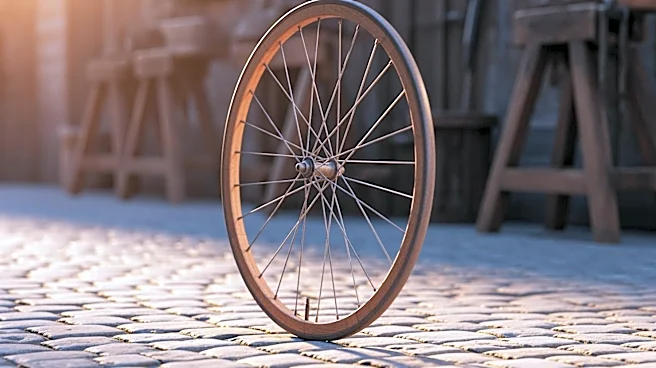
that could be steered and propelled by human power. The Laufmaschine, meaning 'running machine' in German, was constructed entirely of wood and featured two wheels aligned in a straight line. Riders would sit astride the wooden frame and push along the ground with their feet, allowing them to travel faster than walking.
The Laufmaschine quickly gained popularity in Germany and France, where it was also known as the draisienne or velocipede. Its ability to double the average walking speed to around 10 mph on level ground made it an attractive option for those seeking faster transportation. Despite its cumbersome design, the Laufmaschine was a precursor to the modern bicycle, laying the foundation for future innovations in human-powered vehicles.
Transition to the Velocipede
The dandy horse's design evolved over time, leading to the creation of the velocipede bicycle in the 1860s. This new design featured rotary cranks and pedals attached to the front-wheel hub, allowing riders to propel the vehicle without touching the ground. The velocipede marked a significant advancement in bicycle technology, enabling mass production and widespread use.
Manufacturers in France and England began creating their own versions of the velocipede, with improvements such as adjustable saddles to accommodate different riders. The velocipede's design eventually led to the development of the penny-farthing, a bicycle with a large front wheel and a smaller rear wheel, further advancing human-powered transportation.
Lasting Influence on Modern Bicycles
The dandy horse's legacy is evident in the design of modern bicycles. Its influence can be seen in balance bikes for children, which borrow from the dandy horse's design to help children learn balance and coordination. These starter bicycles are direct descendants of the dandy horse, allowing children to transition to pedal-powered bicycles with ease.
The dandy horse's invention marked a turning point in transportation history, influencing the development of bicycles and shaping the way people travel. Its evolution from the Laufmaschine to the velocipede paved the way for future innovations, making it a significant milestone in the history of human-powered vehicles.