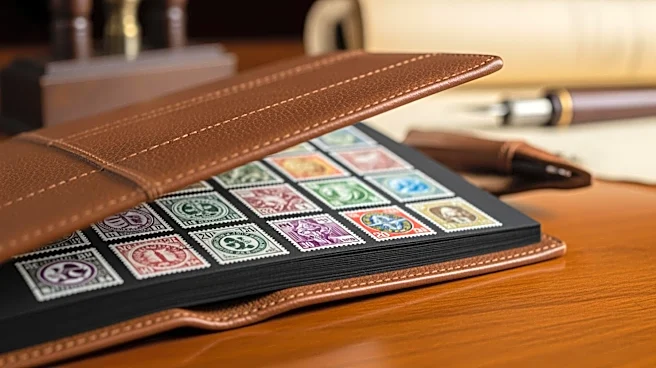






Postage stamp booklets have played a significant role in the history of postal services, offering a convenient way to purchase and store stamps. These booklets, typically made up of small panes of stamps within a cardboard cover, have evolved significantly since their inception. This article delves into the historical development of postage stamp booklets, highlighting key milestones and changes over time.
Early Beginnings
The concept of postage stamp booklets can
be traced back to the late 19th century. Luxembourg was the first country to issue booklets in 1895, followed by Sweden in 1898. The United States joined the trend in 1900, and Great Britain followed suit in 1904. These early booklets were manually produced by separating sheets into smaller panes and binding them together. This method was not distinguishable from sheet stamps, but it laid the groundwork for the more sophisticated production methods that would follow.
In the United States, the first booklet issues in 1900 and 1903 contained stamps denominated at the normal letter rate of 2 cents. By 1907, booklets containing 1-cent stamps suitable for postcards were introduced. This marked a significant development, as it expanded the utility of booklets beyond just letter postage.
Advancements in Production
As the popularity of stamp booklets grew, so did the need for more efficient production methods. Initially, booklets were produced manually, but the demand led to the creation of special plates that allowed for the direct production of booklet panes. These plates yielded sheets of 180 or 360 stamps, which were then cut into panes of six stamps each. This method minimized waste and allowed for more efficient production.
Booklet stamps produced during this period often had one, two, or three straight edges, depending on their position on the pane. Some panes were printed three stamps across, resulting in middle stamps with perforations all around. This variety in stamp edges became a point of interest for collectors, adding another layer of complexity to the hobby of philately.
Modern Developments
In modern times, the production and design of postage stamp booklets have continued to evolve. Some countries, like Sweden, routinely issue a single stamp design in coils, booklets, and sheets, allowing collectors to obtain examples of each format. The oldest types of booklets, which were not much noticed at the time, are now considered rare and valuable.
Collectors often specialize in collecting entire booklets or whole panes from a booklet, which can sell at a premium over the equivalent number of individual stamps. The evolution of postage stamp booklets reflects broader changes in postal services and the ongoing interest in philately as a hobby.