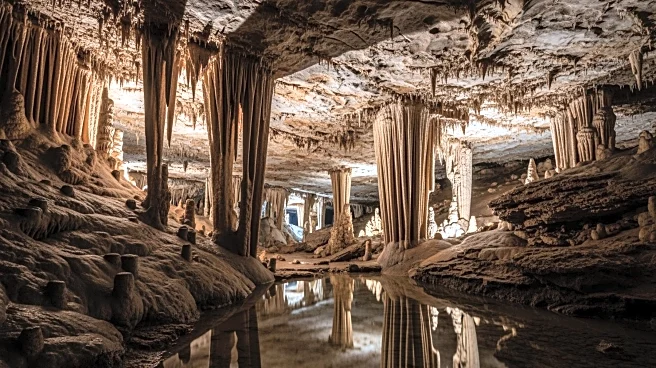

Mammoth Cave National Park in Kentucky is renowned for its extensive cave system, the longest known in the world. This natural wonder is not only a marvel of size but also a fascinating study in geology.
The park's unique geological features have been shaped over millions of years, offering a glimpse into the Earth's dynamic processes. This article delves into the geological aspects that make Mammoth Cave a site of scientific interest and natural beauty.
The Formation of Mammoth Cave
Mammoth Cave's formation is primarily attributed to the region's Mississippian-aged limestone strata, which are capped by a layer of sandstone. This combination has resulted in a remarkably stable cave system. The limestone layers, including the Girkin Formation, Ste. Genevieve Limestone, and St. Louis Limestone, have been dissolved over time by the natural acidity of groundwater, creating the vast network of passageways that we see today.
The upper sandstone layer, known as the Big Clifty Sandstone, plays a crucial role in the cave's stability. It acts as a protective cap, preventing water from easily penetrating the cave system. However, where vertical cracks occur, water can seep through, leading to the formation of dry upper passages devoid of stalactites and stalagmites. These formations require flowing or dripping water to develop, which is absent in these dry areas.
Unique Geological Features
One of the most intriguing features of Mammoth Cave is the epikarstic zone, where thin layers of limestone within the sandstone dissolve to form tiny conduits. These conduits concentrate local runoff into high-elevation springs, which briefly flow on the surface before sinking underground again. This process contributes to the cave's complex hydrology and the development of its intricate passageways.
The park also features a massive sinkhole known as Cedar Sink, where a small river enters one side and disappears underground at the other. This sinkhole is a testament to the ongoing geological processes that continue to shape the landscape of Mammoth Cave National Park.
Ongoing Discoveries and Research
Geological research at Mammoth Cave is an ongoing endeavor, with new discoveries and connections adding several miles to the cave's known length each year. Researchers correlate the cave's stratigraphy with surveys to produce three-dimensional maps of the cave's layers, enhancing our understanding of its formation and evolution.
The park's geology not only attracts scientists but also fascinates visitors who explore its depths. Guided tours offer a chance to witness the cave's geological wonders firsthand, from the dry passages to the stunning formations in areas like the Frozen Niagara room. As exploration continues, Mammoth Cave remains a living laboratory, revealing the Earth's secrets one passage at a time.