


Ice cream is a beloved dessert enjoyed by many, but few may realize the intricate process involved in its creation. From the selection of ingredients to the final product, ice cream production is both an art and a science. This article delves into the methods and techniques that transform simple ingredients into the creamy delight we all love.
Ingredients and Composition
Ice cream is primarily composed of milk or cream, sugar, and flavorings, which can range from vanilla to fruit
extracts. The mixture is cooled below the freezing point of water and stirred to incorporate air spaces, preventing detectable ice crystals from forming. This process results in a smooth, semi-solid foam that is solid at very low temperatures but becomes more malleable as its temperature increases.
The composition of ice cream is a delicate balance of water, milk fat, milk protein, sugar, and air. Water and fat have the highest proportions by weight, creating an emulsion with fat globules. Emulsifiers are needed to disperse the fat, while milk proteins contribute to the emulsification, aeration, and texture. Sucrose is typically used as a sweetening agent, and lactose from milk causes freezing point depression, ensuring the ice cream remains soft.
Production Techniques
Before modern refrigeration, ice cream was a luxury reserved for special occasions due to the laborious process of making it. Ice was cut from lakes and ponds during the winter and stored for summer use. The pot-freezer method involved placing a large bowl inside a tub filled with ice and salt, cooling the ingredients by the mixture of crushed ice and salt.
The hand-cranked churn, which also uses ice and salt for cooling, replaced the pot-freezer method, producing smoother ice cream more quickly. The development of industrial refrigeration and the freezer in the 20th century revolutionized ice cream production, allowing for mass production and widespread availability.
Modern Innovations
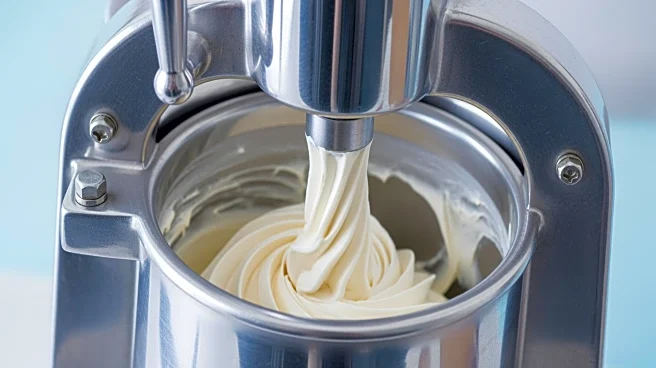
Today, ice cream can be made at home using an ice cream maker, an electrical device that churns the mixture while cooled inside a household freezer. Some models have built-in freezing elements, while others use liquid nitrogen or dry ice for rapid freezing.
Commercial ice cream production has also evolved, with manufacturers introducing various food additives, such as stabilizing agents, to improve texture and shelf life. The introduction of soft ice cream, which has more air mixed in, reduced costs and increased popularity. Premium and super-premium varieties, with thicker textures and richer flavors, have also emerged, catering to diverse consumer preferences.