



Feng Shui, often referred to as Chinese geomancy, is a practice that has evolved significantly over the centuries. Originating in ancient China, Feng Shui has been used to harmonize individuals with their surrounding environment through the strategic placement of objects and structures. This article delves into the historical journey of Feng Shui, highlighting its origins, transformations, and its enduring presence in contemporary society.
Ancient Beginnings
Feng Shui's
roots can be traced back to the Yangshao and Hongshan cultures, where early evidence of its practice was found. Before the invention of the magnetic compass, Feng Shui relied heavily on astronomy to establish connections between humans and the universe. As early as 4000 BC, dwellings in Banpo were aligned with celestial bodies to optimize solar gain, showcasing an early understanding of environmental harmony.
During the Zhou era, Feng Shui principles were codified in texts like the Shijing, which guided the construction of capital cities. The practice was not limited to dwellings; it extended to tombs and graves, as seen in the Puyang site, where mosaics depicted star maps aligned with a north-south axis. This alignment reflected the gaitian cosmography, a concept of heaven-round, earth-square, prevalent in Chinese society.
Development Through Dynasties
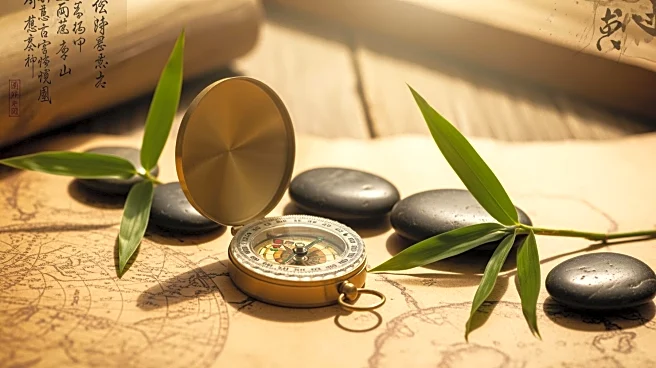
Feng Shui continued to evolve through various Chinese dynasties, adapting to new astronomical discoveries and cultural shifts. The Han dynasty saw the introduction of new techniques, while the Tang and Song dynasties further refined the practice. The invention of the magnetic compass marked a significant advancement, allowing for more precise alignments and the development of traditional Feng Shui instruments like the luopan.
The practice gained immense popularity during the Late Qing dynasty, despite attempts by the government to suppress it. Feng Shui's decentralization made it resilient to such efforts, and it became a tool for rural communities to manage their environments and resist colonial influences. This period highlighted Feng Shui's role in community mobilization and political protest, as it was used to justify attacks against foreign infrastructure.
Modern Resurgence
In the modern era, Feng Shui has seen a resurgence, particularly after China's reform and opening up. Economic liberalization allowed Feng Shui to find new footing, focusing on individualism and social competition. Today, Feng Shui is embraced globally, with consultants offering advice on interior design and architecture to optimize health and wealth.
Despite criticisms labeling it as pseudoscience, Feng Shui remains a significant cultural practice, influencing various aspects of life from environmental management to conflict resolution. Its historical journey from ancient geomancy to a modern lifestyle choice underscores its adaptability and enduring appeal.