
Emergency medical services (EMS) personnel in the United States are required to undergo rigorous training and certification to ensure they can provide high-quality care in emergency situations. This article
explores the training and certification processes for EMS personnel, highlighting the different levels of certification and the importance of ongoing education.
Levels of Certification
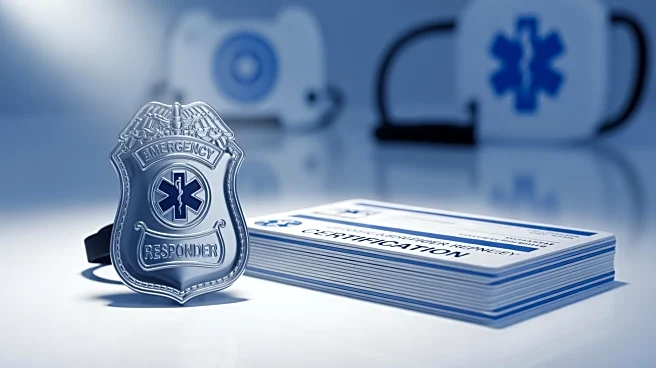
In the U.S., EMS personnel are certified at various levels, each with specific training requirements and scopes of practice. The most common levels are Emergency Medical Responder (EMR), Emergency Medical Technician (EMT), Advanced EMT (AEMT), and Paramedic. Each level builds on the previous one, with increasing responsibilities and skills.
EMRs are trained to provide basic life support, including CPR and first aid, while EMTs can perform more advanced procedures such as administering certain medications and using defibrillators. AEMTs have additional training in advanced airway management and intravenous therapy, while paramedics are trained to perform the most advanced pre-hospital care, including intubation and administering a wider range of medications.
Training Programs and Requirements
Training programs for EMS personnel vary in length and content, depending on the level of certification. EMR programs typically require around 40-80 hours of training, while EMT programs require 120-300 hours. AEMT and paramedic programs are more extensive, often requiring several hundred hours of classroom and clinical training.
These programs are offered by community colleges, technical schools, and specialized EMS training centers. They include both classroom instruction and hands-on clinical experience, allowing students to apply their knowledge in real-world settings. Upon completion of a training program, candidates must pass a certification exam, which typically includes both written and practical components.
Ongoing Education and Recertification
EMS personnel are required to maintain their certification through ongoing education and recertification processes. This ensures that they stay current with the latest medical practices and technologies. Continuing education requirements vary by state and certification level but generally include a combination of classroom instruction and practical training.
Recertification typically involves completing a certain number of continuing education hours and passing a recertification exam. This process helps ensure that EMS personnel remain competent and capable of providing high-quality care to patients in emergency situations.
In conclusion, the training and certification processes for EMS personnel in the U.S. are designed to ensure that they are well-prepared to handle the challenges of emergency medical care. By maintaining high standards of education and ongoing training, the EMS system can continue to provide effective and reliable care to those in need.