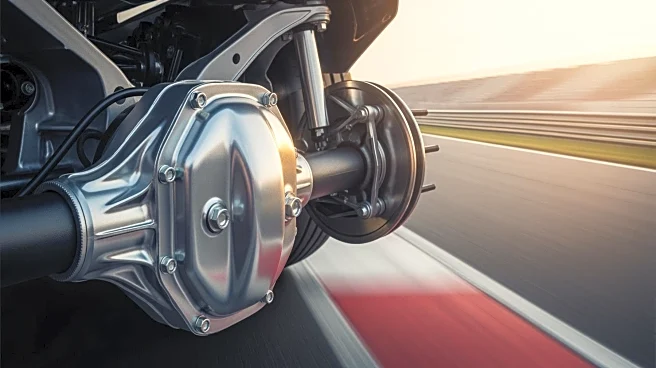




Limited-slip differentials (LSDs) are crucial in enhancing vehicle performance, particularly in high-power and rear-wheel-drive automobiles. This article examines the role of LSDs in improving traction and handling, with a focus on their significance in motorsports.
Enhancing Traction and Handling
The primary advantage of a limited-slip differential is its ability to prevent excessive power allocation to one wheel, ensuring both wheels remain in powered rotation. In situations where
one wheel begins to slip, such as off-roading or driving on snow, LSDs distribute torque more effectively than open differentials.
By limiting wheel spin, LSDs provide better traction and stability, allowing vehicles to navigate challenging terrains with ease. This capability is particularly beneficial in high-power rear-wheel-drive cars, where LSDs prevent the "one wheel peel" phenomenon, ensuring both rear tires receive adequate power.
Role in Motorsports
Limited-slip differentials are considered essential for performing proper drifts, making them a staple in motorsports. During the muscle car era from the mid-1960s to the early 1970s, LSDs gave vehicles a distinct advantage over their wheel-spinning counterparts, enhancing their performance on the track.
In racing, LSDs allow drivers to maintain control during high-speed maneuvers, providing the necessary traction to execute sharp turns and accelerations. The ability to distribute torque effectively between wheels is crucial for achieving optimal performance in competitive settings.
Modern Applications and Innovations
Today, LSDs are integrated into various vehicle designs, including electronically controlled systems that offer precise torque management. These advancements have expanded the applications of LSDs beyond traditional racing cars, making them a standard feature in many modern vehicles.
Electronic traction control systems now emulate LSD functions using brakes, providing an alternative to mechanical designs. This innovation allows for improved handling and safety across different driving conditions, further solidifying the importance of LSDs in automotive engineering.
Limited-slip differentials have significantly impacted vehicle performance, offering enhanced traction and handling in both everyday driving and competitive motorsports. As technology continues to advance, LSDs will remain a vital component in achieving superior vehicle dynamics.