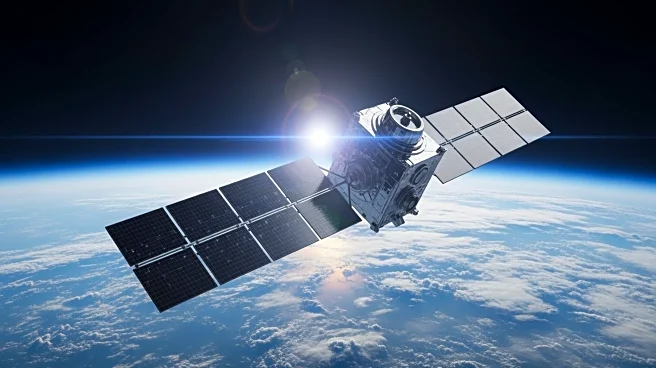



NOAA-9, launched in December 1984, represented a leap forward in weather observation technology. As part of the Advanced TIROS-N series, this satellite was equipped with cutting-edge instruments designed to provide comprehensive data on Earth's atmospheric conditions. Operated by the National Oceanic and Atmospheric Administration (NOAA), NOAA-9 played a crucial role in enhancing weather forecasting and environmental monitoring capabilities.
Advanced Instrumentation
The technological
prowess of NOAA-9 was evident in its array of sophisticated instruments. The Advanced Very High Resolution Radiometer (AVHRR/2) was a key component, capable of scanning global cloud cover and providing sea-surface temperature data. This four-channel radiometer operated in both real-time and recorded modes, offering high-resolution imagery for weather analysis.
Another significant instrument was the TIROS Operational Vertical Sounder (TOVS) suite, which included the High Resolution Infrared Radiation Sounder 2 (HIRS/2), the Stratospheric Sounding Unit (SSU), and the Microwave Sounding Unit (MSU). These instruments were designed to measure atmospheric temperature and humidity profiles, contributing to more accurate weather predictions.
Supporting Experiments
NOAA-9 also carried the Earth Radiation Budget Experiment (ERBE), which measured the energy exchange between Earth and space. This data was vital for climate prediction and understanding radiation budget anomalies. The Solar Backscattered Ultraviolet Radiometer (SBUV/2) mapped ozone concentrations, providing insights into atmospheric composition.
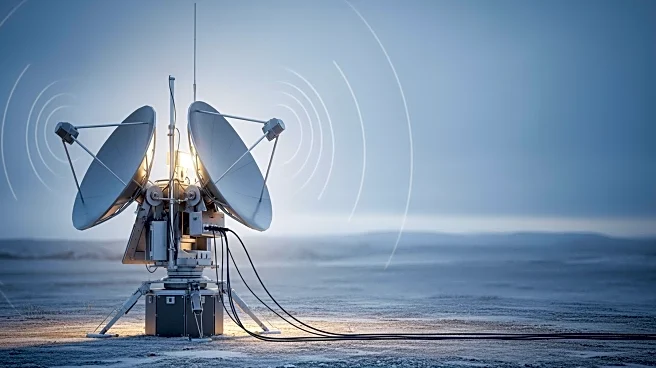
The satellite supported the Search and Rescue Satellite-Aided Tracking System (SARSAT), enhancing emergency response capabilities. This system detected and located distress signals from emergency transmitters, offering real-time data to rescue authorities. Additionally, the Space Environment Monitor (SEM) measured proton and electron fluxes, contributing to space weather monitoring.
Impact on Weather Forecasting
The technological advancements aboard NOAA-9 significantly improved weather forecasting accuracy. The satellite's instruments provided detailed data on cloud cover, atmospheric temperature, and humidity, enabling meteorologists to make more informed predictions. The integration of various sensors allowed for comprehensive environmental monitoring, influencing subsequent satellite designs.
NOAA-9's contributions to atmospheric science and emergency response systems have left a lasting legacy. Its success demonstrated the potential of satellite-based weather observation, paving the way for future advancements in meteorological technology. As a technological marvel, NOAA-9 set a standard for precision and reliability in weather satellites, influencing the development of subsequent missions in the TIROS-N/NOAA series.