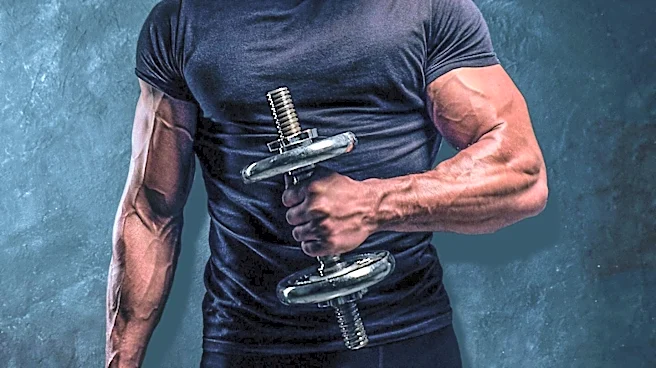




The overhead press, also known as the shoulder press, is a fundamental exercise in weight training that targets the anterior deltoid muscles of the shoulder. This exercise can be performed in various ways, each offering unique benefits and challenges. Understanding these variations can help individuals tailor their workouts to meet specific fitness goals.
Standing vs. Seated Overhead Press
The overhead press can be executed either standing or seated, with each position offering distinct
advantages. The standing overhead press is often favored for its ability to engage more muscles. When standing, the body must stabilize itself, recruiting additional muscle groups beyond the shoulders, such as the core and legs. This makes the standing press a compound exercise that enhances overall strength and balance.
On the other hand, the seated overhead press focuses more on isolating the shoulder muscles. By removing the need for balance, the seated position allows for a more concentrated effort on the deltoids. This can be particularly beneficial for individuals looking to increase shoulder strength without engaging other muscle groups. Both variations are valuable, and the choice between them can depend on personal fitness goals and physical capabilities.
Unilateral and Alternating Hand Presses
Another variation of the overhead press involves performing the exercise unilaterally or with alternating hands. The unilateral press, where the weight is lifted with one hand, can help address muscle imbalances and improve coordination. This variation requires significant core engagement to maintain stability, making it a challenging yet rewarding option.
Alternating hand presses involve holding weights in both hands but pressing one arm at a time. This method allows for a brief rest period for each arm, potentially enabling the lifter to handle heavier weights or perform more repetitions. Both unilateral and alternating presses can be performed with dumbbells or kettlebells, offering flexibility in equipment choice.
The Push Press Variation
The push press is a dynamic variation of the overhead press that incorporates a slight dip in the legs to generate momentum. This additional movement allows lifters to press heavier weights overhead by utilizing the power from their lower body. The push press is particularly popular in strength sports like strongman competitions, where athletes often need to lift heavy implements quickly.
While the push press is less strict than the traditional overhead press, it is an effective way to build explosive strength and power. It requires coordination between the upper and lower body, making it a complex exercise that can enhance athletic performance. Understanding these variations can help individuals choose the right overhead press technique to suit their training needs and goals.