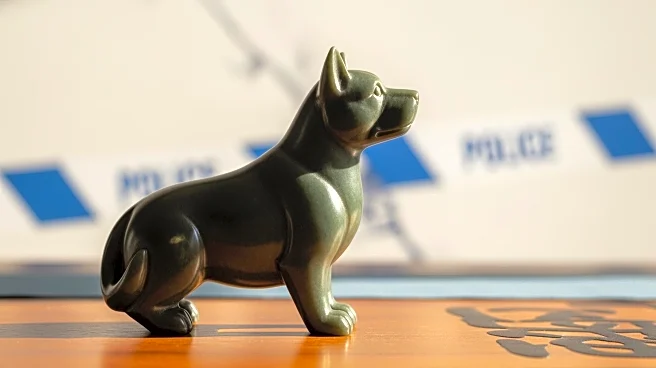




The Fu Quan, also known as the Chinese foo dog, is a rare and ancient working dog breed from China. With a history that spans over 3,000 years, the Fu Quan has been an integral part of Chinese culture and society. This breed is known for its versatility, serving various roles from shepherding to companionship. Despite its rich history, the Fu Quan is now considered endangered, with fewer than 15 individuals remaining worldwide.
Historical Background
The Fu Quan has been
present in China for at least 3,000 years, with its origins shrouded in mystery. There are several theories about its ancestry, including the possibility that it is a mix of Northern Europe's wolves and Chow Chows, or a combination of Chinese wolves and Chow Chows. Throughout history, the Fu Quan has been a versatile working dog, used by the Chinese as a shepherd dog, hunting dog, guard dog, and sled dog. In more recent times, the Fu Quan has also been appreciated as a companion dog, valued for its loyalty and protective nature.
In ancient China, the Fu Quan played a significant role in religious and royal activities. Historical texts such as the Zhouli (The Rites of Zhou) and Liji (The Book of Rites) document the use of dogs in religious sacrifices and royal hunting. These records highlight the importance of dogs in both religious and daily life in ancient China, with special officials appointed to manage them for the royal court.
Cultural Significance
Beyond their practical uses, Fu Quan dogs have held a symbolic place in Chinese culture. They are often seen as mascots of Chinese temples and are believed to bring good luck. During the Tang dynasty, Fu Quan dogs were used as national symbols due to their association with good fortune. In later periods, particularly during the Song, Ming, and Qing dynasties, Fu Quan dogs became symbols of loyalty, prosperity, and good fortune in Chinese culture.
In Chinese art, Fu Quan dogs are frequently depicted playing with children, symbolizing family harmony and future blessings. A notable example is the painting "Children Playing with Dogs" by Song dynasty artist Su Hanchen, which portrays Fu Quan dogs alongside playful children to express wishes for a happy and prosperous family.
Decline and Conservation
Despite their historical and cultural significance, Fu Quan dogs are now endangered, with fewer than 15 individuals remaining worldwide. This decline is attributed to various factors, including changes in societal needs and the introduction of other dog breeds. Efforts to conserve the Fu Quan are crucial to preserving this unique breed and its rich cultural heritage. As a protected species in China, the Fu Quan's survival depends on increased awareness and dedicated conservation efforts to ensure that future generations can appreciate this remarkable breed.