
Lunar eclipses are not only captivating to observe but also fascinating from a scientific perspective. These events provide a unique opportunity to study the interactions between the Earth, Moon, and Sun. This article explores the scientific principles behind lunar eclipses, including the types of eclipses, the role of Earth's shadow, and the factors that influence the appearance of the Moon during an eclipse.
Types of Lunar Eclipses
Lunar eclipses occur when the Moon passes
through Earth's shadow, which consists of two parts: the umbra and the penumbra. The umbra is the central, darkest part of the shadow where the Earth completely blocks the Sun's light. The penumbra is the outer part of the shadow where the Sun's light is only partially blocked.
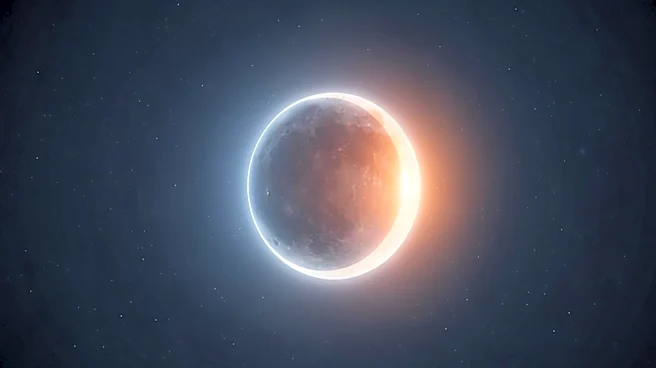
There are three main types of lunar eclipses: penumbral, partial, and total. A penumbral eclipse occurs when the Moon passes through the penumbra, resulting in a subtle dimming of the Moon's surface. A partial eclipse happens when a portion of the Moon enters the umbra, causing part of the Moon to appear darkened. The most dramatic type is the total lunar eclipse, where the entire Moon passes through the umbra, taking on a reddish hue.
Earth's Shadow and the Red Moon
The reddish color of the Moon during a total lunar eclipse is due to Rayleigh scattering. As sunlight passes through Earth's atmosphere, shorter wavelengths like blue and violet are scattered out, leaving the longer red wavelengths to illuminate the Moon. This is the same effect that causes sunsets to appear red.
The amount of dust or clouds in Earth's atmosphere can affect the color of the Moon during an eclipse. A dustier atmosphere will scatter more light, resulting in a deeper red color. This variability means that each total lunar eclipse can have a slightly different appearance, depending on atmospheric conditions at the time.
Factors Influencing Eclipse Duration
The duration of a lunar eclipse is influenced by several factors, including the Moon's distance from Earth. When the Moon is near apogee, the farthest point in its orbit, its orbital speed is slower, which can lengthen the duration of totality. Conversely, when the Moon is near perigee, the closest point in its orbit, the eclipse duration is shorter.
The alignment of the Sun, Earth, and Moon also plays a role in the duration and type of eclipse. Eclipses occur during eclipse seasons, which happen roughly every six months when the Sun is near one of the Moon's nodes. These nodes are the points where the Moon's orbit crosses the ecliptic plane, allowing for the possibility of an eclipse.
Lunar eclipses offer a window into the dynamic interactions of celestial bodies, providing valuable insights into the mechanics of our solar system. They remind us of the intricate dance between the Earth, Moon, and Sun, and the beauty that arises from their alignment.