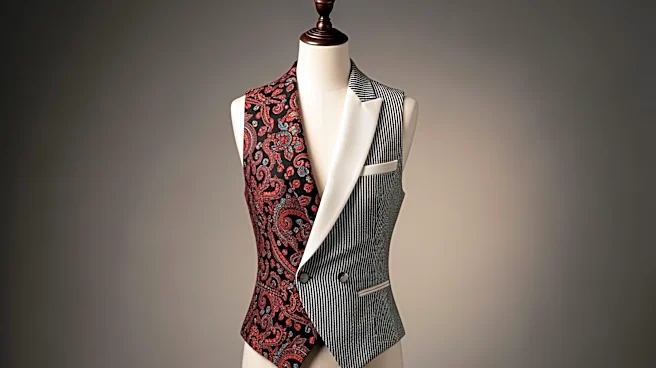






The waistcoat, known as a vest in the United States and Canada, has a rich history that dates back to the 17th century. Originally a staple of men's formal wear, the waistcoat has undergone significant transformations in style, function, and cultural significance. This article delves into the evolution of the waistcoat, tracing its journey from a practical garment to a fashion statement.
Origins and Early Development
The waistcoat's origins can be traced back to the mid-17th century.
It was introduced by King Charles II of England in 1666 as part of a new fashion for men's wear. The initial design was a long piece worn beneath a coat, intended to be visible and to teach the nobility thrift. This early version of the waistcoat was often elaborate and brightly colored, reflecting the fashion trends of the time.
In France, the waistcoat, or "veste," was worn beneath a justacorps and was long-sleeved. It became a symbol of courtly fashion, with King Louis XIV granting select courtiers permission to wear exclusive styles. The waistcoat's design evolved over the years, with changes in length and the introduction of sleeveless versions by the end of the 18th century.
19th Century Transformations
The 19th century saw significant changes in the waistcoat's role and design. Following the French Revolution, there was a shift towards less elaborate clothing, and the waistcoat became more subdued. It transitioned from a centerpiece of male attire to a foundation garment, often worn with a corset to emphasize a cinched waist.
As the century progressed, the waistcoat became shorter and tighter, aligning with the dandyism movement. It was often worn with a frock coat, and its design became more standardized. By the late 19th century, the waistcoat was an essential part of the three-piece suit, with a focus on matching the fabric of the coat and trousers.
Modern Adaptations and Cultural Impact
In the 20th and 21st centuries, the waistcoat has continued to evolve, adapting to changing fashion trends. It remains a key component of formal wear, particularly in the context of black tie and white tie events. However, it has also found a place in casual and alternative fashion scenes, such as indie and steampunk subcultures.
The waistcoat's versatility has allowed it to remain relevant in contemporary fashion. It is often worn both open and closed, over dress shirts or even t-shirts, reflecting its adaptability. The garment's enduring appeal is a testament to its ability to balance tradition with modernity, making it a timeless piece in the world of fashion.