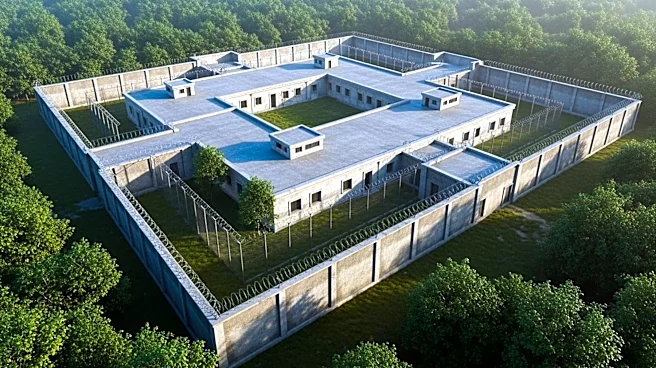




Osama bin Laden's compound in Abbottabad, Pakistan, was a carefully constructed fortress designed to keep its occupants hidden from the outside world. Known locally as the Waziristan Haveli, the compound was a large, upper-class house within a walled enclosure, serving as a safe house for the al-Qaeda leader. The architecture and security features of the compound played a crucial role in bin Laden's ability to evade capture for years.
Architectural Design
Completed in
2005, the compound was situated on a 3,500-square-meter plot of land, much larger than the surrounding houses. The main building was a three-story structure, with the third floor added illegally after the initial construction. The compound's design was intended to blend in with the neighborhood, except for its size and security measures.
The perimeter of the compound was surrounded by concrete walls ranging from 3.7 to 5.5 meters in height, topped with barbed wire. The compound had two security gates and a third-floor balcony with a privacy wall. The house itself had few windows, and photographs from inside showed modest furnishings and excessive clutter.
Security Features
The compound's security features were designed to prevent intrusions and maintain secrecy. There were no internet or phone connections running into the compound, and its residents burned their trash instead of setting it out for collection. Security cameras and satellite dishes were present, indicating a high level of surveillance.
The grounds of the compound included a well-kept vegetable garden, rabbits, chickens, and a cow. These features allowed the residents to maintain a degree of self-sufficiency, reducing the need to venture outside the compound for supplies. The compound also had an adjacent grazing area and a deep water well, providing a separate water supply from the local municipality.
The Role of the Compound in Bin Laden's Evasion
Bin Laden reportedly lived in the compound for at least five years, evading capture by avoiding public exposure and maintaining strict security protocols. The compound's location, less than a mile from the Pakistan Military Academy, raised questions about whether bin Laden had support from elements within the Pakistani government.
The compound's design and security measures were crucial in allowing bin Laden to remain hidden for so long. However, they ultimately could not prevent the U.S. Navy SEALs from locating and killing him in May 2011. The compound was demolished by Pakistani authorities in February 2012 to prevent it from becoming a shrine for bin Laden's followers.
Osama bin Laden's compound in Abbottabad serves as a testament to the lengths he went to avoid capture, and the challenges faced by those seeking to bring him to justice.