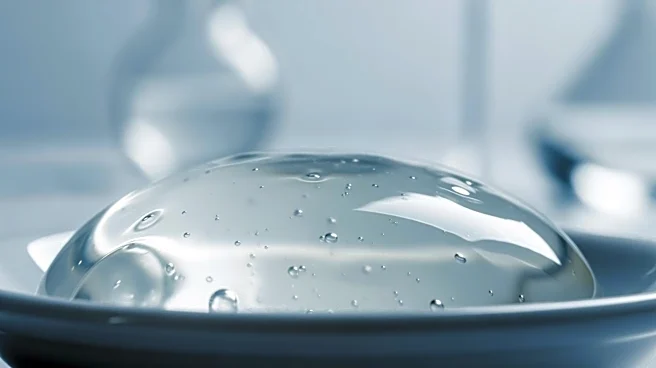







Petroleum jelly, also known as petrolatum, is a fascinating substance with unique chemical properties. This semi-solid mixture of hydrocarbons has been used for over a century in various applications, from skincare to industrial processes. Understanding the science behind petroleum jelly reveals why it is such a versatile and effective product.
Chemical Composition and Properties
Petroleum jelly is composed of hydrocarbons with carbon numbers mainly higher than 25. It is a semi-solid
mixture, meaning it holds its shape like a solid but can be molded like a liquid. This unique property is due to its microstructure, which consists of partially crystalline stacks of lamellar sheets that immobilize the liquid portion.
The melting point of petroleum jelly varies depending on its exact composition, typically ranging between 40 and 70 °C (105 and 160 °F). It is colorless or pale yellow when not highly distilled and is devoid of taste and smell when pure. Petroleum jelly is insoluble in water but soluble in solvents like dichloromethane, chloroform, and benzene.
Stability and Compatibility
One of the key properties of petroleum jelly is its stability. It does not oxidize when exposed to air and is not readily acted upon by chemical reagents. This stability makes it an ideal ingredient in products that require a long shelf life.
Petroleum jelly is compatible with a wide range of materials and chemicals, making it suitable for various applications. It acts as a plasticizer on polypropylene and is used in combination with other materials to enhance their properties. Its compatibility and stability contribute to its widespread use in cosmetics, pharmaceuticals, and industrial processes.
Practical Applications
The unique properties of petroleum jelly make it an effective barrier against moisture loss. It is used extensively in skincare products to protect and heal the skin by preventing transepidermal water loss. This property is also exploited in sports, where petroleum jelly is used to prevent chafing and provide heat insulation for swimmers.
In industrial settings, petroleum jelly is used as a lubricant and protective coating. Its ability to repel water makes it an excellent choice for protecting metal surfaces from corrosion. It is also used in the production of candles, where it softens the wax blend and enhances fragrance retention.
The science behind petroleum jelly explains its versatility and effectiveness. Its unique chemical composition and properties make it a valuable resource in various fields, from skincare to industrial applications. Understanding these properties helps us appreciate the many ways petroleum jelly can be used to improve our daily lives.