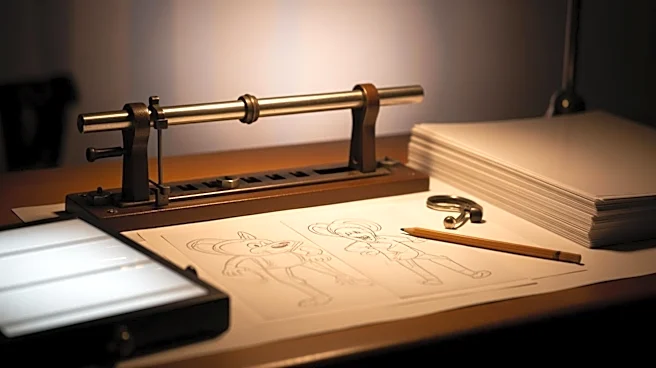



In 1906, the world of cinema witnessed a groundbreaking moment with the release of "Humorous Phases of Funny Faces," directed by James Stuart Blackton. This short film is often celebrated as the first animation on standard film, marking a significant milestone in the history of animation. The film's innovative use of stop-motion and cutout animation techniques set the stage for future developments in the field.
Stop-Motion Animation
One of the key techniques employed in
"Humorous Phases of Funny Faces" is stop-motion animation. This method involves capturing individual frames of objects or drawings, which are then played in sequence to create the illusion of movement. In the film, Blackton's hand is seen drawing two faces on a chalkboard, which then appear to come to life and engage in various antics. This use of stop-motion was a novel approach at the time and demonstrated the potential of animation to bring static images to life.
The transition to stop-motion in Blackton's work was reportedly accidental. According to accounts, while filming a series of stop-action effects, the crew noticed an intriguing effect created by steam puffs moving across the screen. This discovery led to the deliberate use of stop-motion in "Humorous Phases of Funny Faces," showcasing the technique's ability to create dynamic and engaging visual effects.
Cutout Animation
In addition to stop-motion, "Humorous Phases of Funny Faces" also utilized cutout animation. This technique involves manipulating flat characters or objects cut from materials such as paper or cardboard. By moving these cutouts frame by frame, animators can create the illusion of movement. In Blackton's film, cutout animation was used alongside stop-motion to enhance the visual storytelling and add depth to the animated sequences.
The combination of stop-motion and cutout animation in "Humorous Phases of Funny Faces" was a pioneering effort that expanded the possibilities of animated filmmaking. It demonstrated how different techniques could be integrated to produce a cohesive and entertaining narrative, paving the way for future animators to experiment with various methods.
Impact on Animation
The innovative techniques showcased in "Humorous Phases of Funny Faces" had a lasting impact on the animation industry. By demonstrating the potential of animation to create lifelike movements and engaging stories, Blackton's film inspired a new generation of animators to explore and expand the medium. The film's success also highlighted the commercial viability of animated films, encouraging studios to invest in the development of animation as a form of entertainment.
As one of the earliest examples of animated filmmaking, "Humorous Phases of Funny Faces" remains a significant milestone in the history of cinema. Its pioneering use of stop-motion and cutout animation techniques laid the foundation for the evolution of animation, influencing countless filmmakers and animators in the years to come.