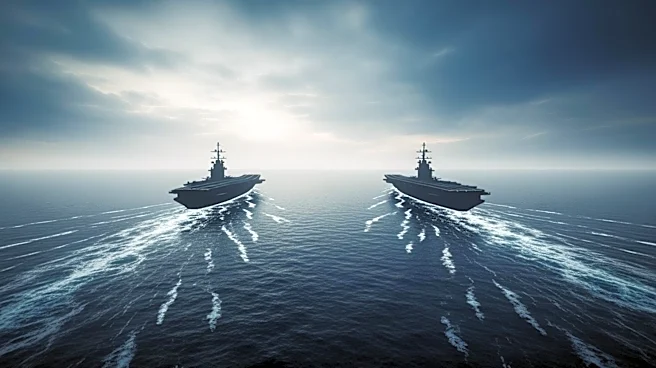






The Battle of the Coral Sea, fought from May 4 to May 8, 1942, marked a pivotal moment in World War II. This naval confrontation between the Japanese and Allied forces, primarily the United States and Australia, was significant not only for its immediate outcomes but also for its strategic implications. The battle was unique as it was the first in which aircraft carriers engaged each other without the ships themselves coming into direct contact. This article
delves into the strategic impact of the battle and how it influenced the course of the war.
A New Type of Naval Warfare
The Battle of the Coral Sea introduced a new form of naval warfare, where aircraft carriers played a central role. Unlike previous naval battles, the ships did not directly engage each other; instead, aircraft were used to attack enemy vessels. This shift in strategy highlighted the importance of air power in naval operations and set the stage for future carrier battles. The commanders on both sides had to adapt quickly to this new form of warfare, which required rapid decision-making and coordination over vast distances.
The Japanese forces, despite their initial tactical advantage, faced challenges due to poor communication and coordination. Admiral Inoue, stationed far from the battle, struggled to direct his forces effectively. In contrast, the American forces, led by Admiral Fletcher, benefited from being on-site, allowing for more efficient command and control. This difference in command structure played a crucial role in the outcome of the battle.
Strategic Consequences for Japan
Strategically, the Battle of the Coral Sea was a setback for Japan. Although they sank more ships than the Allies, their primary objective of capturing Port Moresby was thwarted. This failure had significant implications for Japan's expansion plans in the Pacific. Port Moresby was seen as a critical base for launching further attacks on Australia, and its defense by the Allies ensured that supply lines between the United States and Australia remained intact.
The battle also had a direct impact on subsequent engagements. The damage sustained by the Japanese carriers Shōkaku and Zuikaku prevented them from participating in the Battle of Midway, a crucial encounter that further shifted the balance of power in favor of the Allies. The inability to capture Port Moresby marked the first time a Japanese invasion force was stopped, boosting Allied morale and altering Japanese perceptions of American naval capabilities.
Long-term Implications for the Allies
For the Allies, the Battle of the Coral Sea was a strategic victory despite the loss of ships. It demonstrated the effectiveness of signals intelligence, as the U.S. had decoded Japanese plans, allowing them to prepare and counter the offensive. The battle also underscored the importance of aircraft carriers, leading to improvements in carrier tactics and anti-aircraft defenses.
The lessons learned from the Coral Sea influenced future naval engagements, including the Guadalcanal Campaign and the Battle of Midway. The battle's outcome reinforced the strategic importance of maintaining control over key locations in the Pacific, ultimately contributing to the Allies' success in the region. As a result, the Battle of the Coral Sea remains a significant milestone in naval history, shaping the strategies and outcomes of World War II.