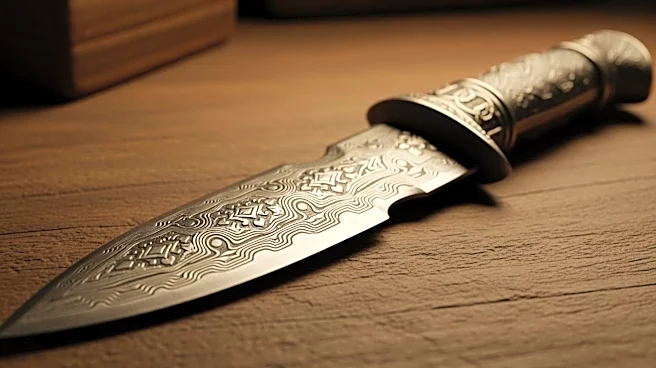






Knives are not only practical tools but also hold deep cultural and symbolic significance in many societies around the world. From rituals and superstitions to ceremonial uses, knives have been woven into the fabric of human culture for centuries. This article delves into the diverse cultural roles knives play, highlighting their importance in various traditions and beliefs.
Rituals and Superstitions
In many cultures, knives are associated with rituals and superstitions, often
symbolizing protection and transition. For example, in some traditions, placing a knife under the bed during childbirth is believed to ease pain, while sticking a knife into the headboard of a cradle is thought to protect the baby. These practices reflect the knife's historical role as a tool for survival and its perceived power to ward off evil.
Anglo-Saxon burial rites included knives to ensure the deceased were not defenseless in the afterlife. This practice underscores the knife's significance as a symbol of strength and protection. Similarly, in Greece, a black-handled knife placed under the pillow is used to keep nightmares at bay, illustrating the knife's role in safeguarding individuals from harm.
Ceremonial Uses
Knives are integral to many ceremonial practices, often serving as symbols of authority and tradition. In Sikhism, the kirpan is a ceremonial knife that baptized Sikhs must wear as one of the five visible symbols of their faith. This practice emphasizes the knife's role as a representation of spiritual commitment and readiness to defend the faith.
In Japan, the tantō knife is used in the ritual suicide practice of seppuku, reflecting the samurai's code of honor and the knife's role in maintaining personal integrity. Similarly, the athame, a ceremonial knife used in Wicca and neopagan witchcraft, is employed in rituals to direct energy and cast circles, highlighting the knife's symbolic power in spiritual practices.
Knives in Cultural Traditions
Knives also play a significant role in cultural traditions, often serving as markers of identity and heritage. The Scottish dirk, a long-bladed dagger, is worn by Highlanders for customary and ceremonial purposes, symbolizing Scottish pride and martial prowess. In Nepal, the kukri knife is both a tool and a weapon, deeply embedded in the cultural identity of the Gurkhas.
In Finland, the puukko knife is a traditional woodcraft tool, reflecting the Finnish people's connection to nature and their practical approach to life. These cultural knives are not only functional but also serve as symbols of the communities they represent, embodying the values and traditions passed down through generations.