




Ballast plays a crucial role in car racing, serving as a tool to adjust vehicle weight and enhance performance. In various racing series, including Formula 1, ballast is strategically used to meet minimum weight requirements and influence handling characteristics. This article delves into the significance of ballast in car racing, examining its application and impact on vehicle dynamics.
Meeting Minimum Weight Requirements
In car racing, vehicles are often required to meet specific minimum
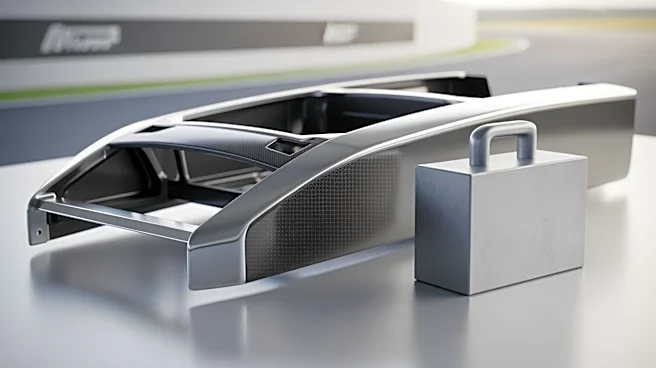
weight standards to ensure fair competition. Ballast, typically in the form of metallic plates, is added to cars that fall below these weight thresholds. This practice is prevalent in Formula 1, where cars are meticulously engineered to be as light as possible for speed and efficiency. By adding ballast, teams can bring their cars up to the mandated weight, ensuring compliance with regulations.
The strategic placement of ballast allows teams to fine-tune the car's weight distribution, which can significantly affect handling. By adjusting the position of the ballast, teams can alter the car's center of gravity, impacting how the vehicle behaves during cornering and acceleration. This flexibility provides a competitive edge, allowing teams to optimize their cars for different tracks and conditions.
Altering Vehicle Performance
Beyond meeting weight requirements, ballast is used to modify a car's performance characteristics. In some racing series, ballast placement is restricted to certain areas of the car, which can influence the vehicle's balance and stability. By carefully positioning ballast, teams can enhance the car's grip and responsiveness, tailoring its performance to suit specific racing strategies.
In the British Touring Car Championship, ballast is employed as a handicap system. Leading drivers at the end of one race are given additional ballast for the next race, leveling the playing field and adding an element of strategy to the competition. This use of ballast as a performance modifier highlights its versatility and importance in racing.
Universal Application in Racing
The use of ballast is not limited to Formula 1 or touring cars; it is a common practice across various racing disciplines. Whether in gliding competitions, where weights are added to maximize speed, or in underwater diving, where ballast compensates for buoyancy, the principle remains the same: ballast is a tool for stability and control.
In car racing, the ability to adjust ballast provides teams with a valuable mechanism to optimize their vehicles. By understanding the nuances of ballast placement and its effects on performance, teams can gain a competitive advantage, making it an integral part of racing strategy and vehicle design.