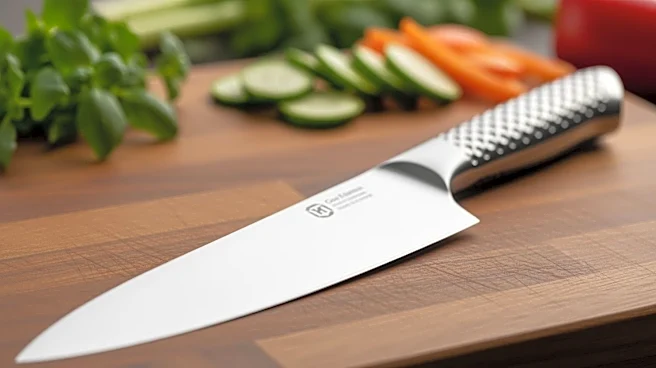


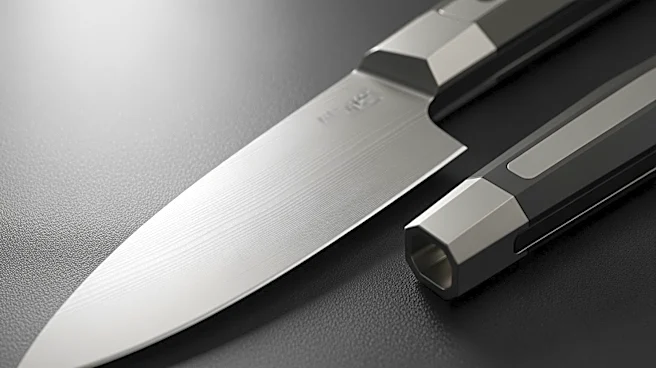

The chef's knife, also known as a cook's knife, is a staple in Western kitchens, celebrated for its versatility and efficiency in food preparation. Originally designed for slicing and disjointing large cuts of meat, it has evolved into a multi-purpose tool that can handle a variety of kitchen tasks. This article delves into the design and functionality of the chef's knife, highlighting its role in Western culinary practices.
Design and Functionality
A typical European chef's
knife features a blade that is about 20 centimeters (8 inches) long and 4 centimeters (1½ inches) wide. However, the size can vary, with some models ranging from 15 to 36 centimeters in length. The blade is broad and sturdy, making it suitable for a range of tasks from slicing meat to chopping vegetables. The design of the chef's knife allows it to perform well in many kitchen tasks, though it may not excel in any single one.
The blade of a chef's knife can be made from various materials, including carbon steel, stainless steel, or a combination of both. Some knives even feature a glass-like ceramic blade. The handle materials also vary, with options including wood, steel, or synthetic composites. This variety in materials contributes to the knife's durability and adaptability in different cooking environments.
Blade Construction and Edge
Chef's knives are crafted using either forged or stamped blades. Forged blades are typically of higher quality, made through a multi-step process involving heating and hammering steel to shape and harden it. These knives often feature a full-tang design, where the metal extends from the tip of the blade to the end of the handle, providing balance and strength.
Stamped blades, on the other hand, are cut from cold rolled steel and are generally more affordable. Despite being mass-produced, advancements in manufacturing have allowed for high-quality stamped knives. The edge of a chef's knife can be ground in various ways to enhance its multi-purpose capabilities. For instance, the fine tip might be sharpened for precision work, while the midsection is suited for general cutting and the heel is designed for heavy-duty tasks.
Variations in Style
Western chef's knives come in two common blade shapes: French and German. French-style knives have a straighter edge that curves sharply at the tip, known as the "French tip." This design is ideal for slicing and precision work. German-style knives, however, feature a more continuous curve along the entire edge, making them suitable for rocking motions during chopping.
In conclusion, the chef's knife is an indispensable tool in Western kitchens, valued for its versatility and robust design. Whether forged or stamped, French or German, the chef's knife remains a fundamental instrument for both professional chefs and home cooks alike.