


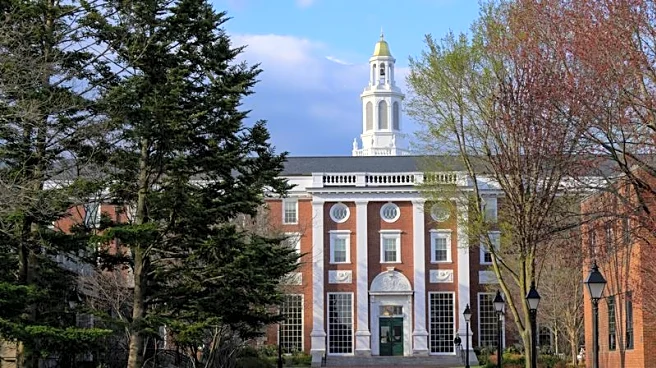

Harvard University, established in 1636, holds the distinction of being the oldest institution of higher learning in the United States. Its founding was a pivotal moment in American education, setting the stage for the development of higher education in the country. This article delves into the early years of Harvard, examining its origins, initial challenges, and the foundational elements that shaped its future.
The Establishment of Harvard College
Harvard University was founded in 1636
in New Towne, a settlement in the Massachusetts Bay Colony. The colony's leaders recognized the need for an institution to train clergy for the new commonwealth, which they envisioned as a "church in the wilderness." The Great and General Court, the governing body of the colony, voted to establish Harvard College, named after its first benefactor, John Harvard, a clergyman who bequeathed his library and a substantial sum of money to the institution.
In its early years, Harvard College focused on training Puritan Congregational ministers, offering a classical curriculum modeled after the University of Cambridge in England. Despite its religious roots, Harvard never formally affiliated with any Protestant denomination, maintaining a curriculum that conformed to Puritan tenets.
Growth and Challenges in the 17th Century
The Harvard Corporation's charter was granted in 1650, marking a significant milestone in the college's development. However, Harvard faced challenges, including controversies over religious dissent. The conflict with Henry Dunster, Harvard's second president, highlighted the tension between Puritan orthodoxy and emerging religious diversity. Dunster's shift to the Baptist faith led to his resignation, illustrating the colony's struggle to reconcile religious differences.
Despite these challenges, Harvard continued to grow, establishing the Harvard Indian College in the 1640s to educate Native American students. Although only a few students attended, and just one graduated, this initiative demonstrated Harvard's early commitment to expanding educational opportunities.
Harvard's Role in Colonial Society
Harvard played a central role in colonial Massachusetts, with its graduates dominating clerical and civil ranks. The college's influence extended beyond education, contributing to the economic and social development of the region. By 1700, Harvard was strong enough to regulate its own affairs, providing financial support for local infrastructure and public health initiatives.
The college's early motto, "Veritas Christo et Ecclesiae" (Truth for Christ and the Church), reflected its religious mission. However, as Harvard evolved, it began to embrace a broader educational mandate, laying the groundwork for its transformation into a leading academic institution.