



The discovery of feathered dinosaurs has revolutionized our understanding of these ancient creatures, offering new insights into their anatomy and evolutionary history. This article explores the anatomical features of feathered dinosaurs, focusing on the structure and function of their feathers and how these features relate to modern birds.
The Structure of Dinosaur Feathers
Feathers in dinosaurs varied widely in structure and complexity. The simplest forms were filamentous, resembling
the downy feathers of modern birds. These primitive feathers were likely used for insulation, helping dinosaurs maintain a stable body temperature. As dinosaurs evolved, so did their feathers, becoming more complex and specialized.
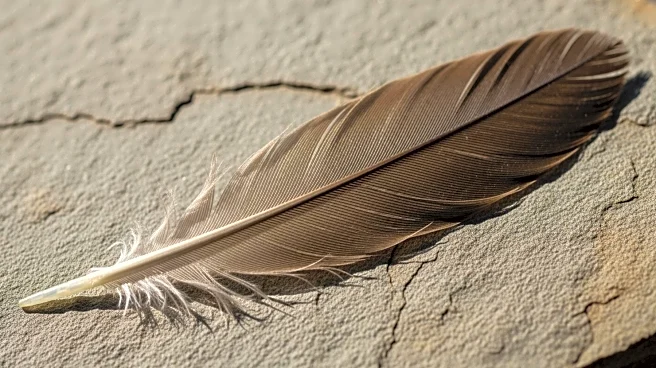
Some dinosaurs, such as those in the group Coelurosauria, developed feathers with a central shaft and branching barbs, similar to the contour feathers of birds today. These feathers may have served multiple functions, including display, camouflage, and even aiding in flight for some species. The presence of feathers in a wide range of dinosaur species suggests that they were a common feature, possibly present in the last common ancestor of all dinosaurs.
Anatomical Adaptations for Feathers
The anatomy of feathered dinosaurs reveals several adaptations that supported the development and use of feathers. For instance, many feathered dinosaurs had a wishbone, or furcula, which is a key feature in modern birds that aids in flight. This bone, along with other skeletal adaptations, suggests that some feathered dinosaurs were capable of gliding or even powered flight.
Additionally, the presence of quill knobs on the forelimbs of certain dinosaurs, such as Velociraptor, indicates that they had large, well-developed feathers. These structures are similar to those found in modern birds, where they serve as attachment points for flight feathers. The evolution of these features highlights the close relationship between feathered dinosaurs and birds, supporting the theory that birds are direct descendants of theropod dinosaurs.
The Significance of Feathered Dinosaurs
The discovery of feathered dinosaurs has profound implications for our understanding of dinosaur evolution and the origins of birds. Feathers, once thought to be unique to birds, are now recognized as a widespread feature among theropod dinosaurs. This realization has reshaped our perception of dinosaurs, painting a picture of vibrant, dynamic creatures rather than the scaly reptiles of traditional depictions.
Feathered dinosaurs also provide valuable insights into the evolutionary processes that led to the development of flight. By studying the anatomy and function of dinosaur feathers, scientists can better understand how these features evolved and contributed to the success of birds as a group. As research continues, the study of feathered dinosaurs promises to reveal even more about the fascinating history of life on Earth.