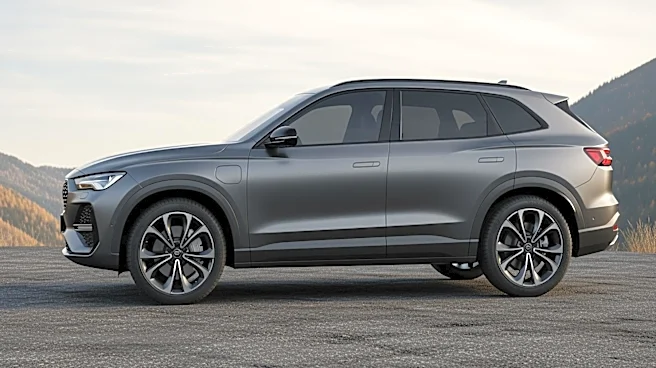

The Hyundai Tucson has been a staple in the compact SUV market since its introduction in 2004. Known for its versatility and reliability, the Tucson has undergone significant changes over the years, adapting
to market demands and technological advancements. This article delves into the evolution of the Hyundai Tucson, highlighting key developments and milestones that have shaped its journey.
The Beginnings: First Generation
The Hyundai Tucson made its debut in 2004, marking Hyundai's entry into the compact crossover SUV segment. The first generation Tucson was built on an Elantra-based platform, sharing similarities with the redesigned 2005 Kia Sorento. This initial model was positioned below Hyundai's larger SUVs, the Santa Fe and Vera Cruz, offering a more affordable and compact option for consumers.
During its early years, the Tucson was equipped with a variety of engine options, including both petrol and diesel variants. The design focused on practicality and functionality, appealing to families and individuals seeking a reliable vehicle for everyday use. The Tucson's introduction was a strategic move by Hyundai to capture a growing market segment, and it quickly gained popularity for its value and performance.
Transition and Rebranding: Hyundai ix35
In 2009, the Hyundai Tucson underwent a significant transformation, temporarily rebranded as the Hyundai ix35 in certain markets. This change was part of Hyundai's global strategy to streamline its model names and enhance brand recognition. The ix35 featured updated styling and improved features, reflecting Hyundai's commitment to innovation and customer satisfaction.
The rebranding to ix35 was accompanied by advancements in technology and design, including enhanced safety features and a more refined interior. Despite the name change, the vehicle continued to embody the qualities that made the Tucson popular, such as affordability and reliability. The ix35 served as a bridge between the original Tucson and its future iterations, maintaining Hyundai's presence in the competitive SUV market.
Return to Tucson: Current Generation
In 2015, Hyundai reintroduced the Tucson name globally, marking the beginning of the current generation. This model brought significant upgrades in design, performance, and technology, aligning with modern consumer expectations. The current Tucson is available with various engine options, including the 1.6 L Hyundai Gamma I4 and 2.0 L Hyundai Theta II I4, catering to diverse preferences.
The latest Tucson models emphasize comfort and convenience, featuring advanced transmission systems and improved fuel efficiency. Hyundai's focus on innovation is evident in the Tucson's design, which incorporates sleek lines and a spacious interior. As the Tucson continues to evolve, it remains a testament to Hyundai's ability to adapt and thrive in the ever-changing automotive landscape.