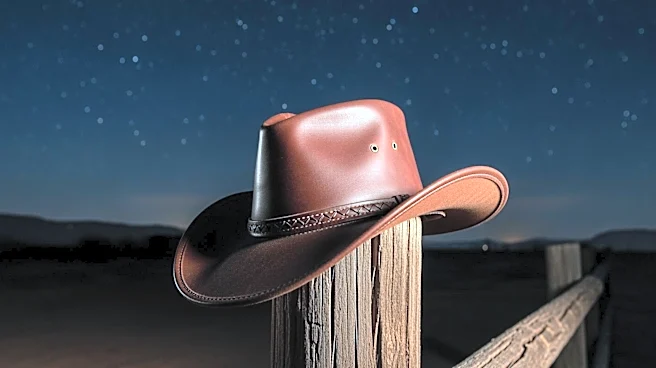







Midnight Cowboy, released in 1969, is a film that left a lasting mark on American cinema and culture. Directed by John Schlesinger, the film explores themes of loneliness and survival in the urban landscape of New York City. Its impact extends beyond its narrative, influencing the film industry and reflecting societal changes during a turbulent era.
Breaking New Ground in Cinema
Midnight Cowboy was groundbreaking in its portrayal of complex characters and controversial themes.
It was one of the earliest mainstream American films to explicitly address homosexual relationships, contributing to its status as a pioneering work of queer cinema. The film's depiction of two hustlers, Joe Buck and Rico Rizzo, living on the fringes of society, challenged traditional narratives and offered a raw, unfiltered look at urban life.
The film's success at the Academy Awards, where it won Best Picture, Best Director, and Best Adapted Screenplay, underscored its significance. It remains the only X-rated film to win Best Picture, highlighting its bold approach to storytelling and its willingness to confront taboo subjects.
Reflecting Societal Changes
The late 1960s was a period of significant social change in the United States, and Midnight Cowboy captured the essence of this era. The film's exploration of themes such as poverty, isolation, and the search for identity resonated with audiences experiencing the cultural shifts of the time. Its portrayal of New York City as a place of both opportunity and despair mirrored the complexities of urban life during a period of rapid transformation.
The film's inclusion in the United States National Film Registry in 1994, deemed "culturally, historically or aesthetically significant," further solidified its place in American cultural history. It serves as a time capsule, offering insights into the challenges and aspirations of individuals navigating a changing world.
Legacy and Influence
Midnight Cowboy's influence extends beyond its initial release. It has inspired filmmakers and artists, contributing to the evolution of cinema as a medium for exploring deep and often uncomfortable truths. The film's gritty realism and character-driven narrative paved the way for future works that sought to capture the human experience in all its complexity.
The film's legacy is evident in its continued recognition and analysis by critics and scholars. Its placement on the American Film Institute's list of the 100 greatest American films of all time reflects its enduring impact. Midnight Cowboy remains a touchstone for discussions about the intersection of art, society, and the human condition.