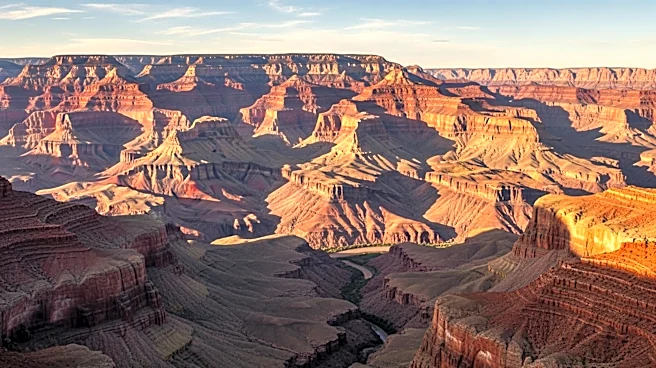







Grand Canyon National Park, located in northwestern Arizona, is a testament to the enduring efforts of conservationists and lawmakers who recognized the need to preserve its natural beauty. Established as a national park in 1919, the park has a rich history marked by significant milestones and legislative actions that have shaped its current status.
Early Efforts and Challenges
The journey to establish Grand Canyon National Park began in the late 19th century. The first bill to designate
the area as a national park was introduced by Senator Benjamin Harrison in 1882. Despite his efforts, the bill faced repeated defeats in Congress. Harrison's vision was to make the Grand Canyon the third national park in the United States, following Yellowstone and Mackinac.
In 1893, after becoming President, Harrison designated the Grand Canyon as a forest reserve, a move that marked the beginning of federal protection for the area. Theodore Roosevelt, a staunch advocate for conservation, furthered these efforts by proclaiming the Grand Canyon Game Preserve in 1906 and the Grand Canyon National Monument in 1908. Despite these designations, it took several more years and legislative battles before the Grand Canyon was officially recognized as a national park.
The Establishment of the National Park
The Grand Canyon National Park Act was finally signed into law by President Woodrow Wilson on February 26, 1919. This act marked the official establishment of the park, making it the 17th national park in the United States. The creation of the park was a significant victory for the conservation movement, ensuring the protection of the Grand Canyon's unique geological features and natural beauty.
The National Park Service, established in 1916, assumed administration of the park, overseeing its preservation and management. The park's designation helped prevent proposals to dam the Colorado River within its boundaries, preserving the natural flow and ecosystem of the river.
Expansion and Recognition
Over the years, Grand Canyon National Park has expanded its boundaries and received international recognition. In 1975, the park was enlarged to include additional areas, further protecting the canyon's diverse landscapes. The park's significance was globally acknowledged when UNESCO designated it a World Heritage Site in 1979.
The park celebrated its 100th anniversary in 2019, marking a century of conservation and public enjoyment. Today, Grand Canyon National Park continues to attract millions of visitors annually, offering breathtaking views and a glimpse into the geological history of the Earth. Its establishment and continued preservation serve as a testament to the enduring legacy of those who fought to protect this natural wonder.