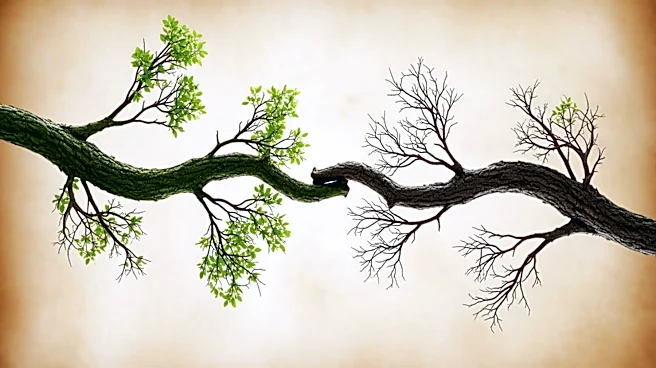








The nature versus nurture debate has been a central topic in biology and society, focusing on the relative influence of genetic inheritance and environmental factors on human behavior. This debate has evolved significantly over time, with various perspectives shaping its trajectory. Understanding the historical context of this debate provides insight into how it has influenced scientific and societal views on human development.
Early Beginnings and Philosophical Roots
The origins of the nature
versus nurture debate can be traced back to ancient philosophical discussions. Early thinkers pondered whether human behavior was primarily determined by innate qualities or shaped by environmental influences. This philosophical inquiry laid the groundwork for later scientific exploration into the roles of genetics and environment.
In the 17th century, philosopher John Locke introduced the concept of tabula rasa, or blank slate, suggesting that humans acquire all behavioral traits from environmental influences. This idea gained traction and influenced the development of the blank slate view in human developmental psychology, which dominated much of the 20th century. Locke's perspective was a counterpoint to earlier notions of innate ideas, sparking debates that would continue for centuries.
The Rise of Scientific Inquiry
The 19th and early 20th centuries saw a shift towards scientific investigation of the nature versus nurture debate. Francis Galton, a Victorian polymath, played a pivotal role in popularizing the modern sense of the debate. Influenced by his half-cousin Charles Darwin's work on evolution, Galton explored the influence of heredity and environment on social advancement, laying the foundation for the fields of eugenics and behavioral genetics.
During this period, the debate became more scientifically grounded, with researchers seeking to quantify the contributions of genetics and environment to human traits. The development of twin studies and other research methodologies allowed scientists to disentangle the complex interplay between nature and nurture, leading to a more nuanced understanding of human behavior.
Modern Perspectives and Ongoing Debates
In recent decades, the nature versus nurture debate has evolved to acknowledge the inseparable interaction between genetic and environmental factors. The idea of a strict dichotomy between nature and nurture is now considered limited, as both elements contribute substantially to human development. Researchers have identified feedback loops where nature and nurture influence each other, further blurring the lines between the two.
The debate continues to shape discussions in fields such as genetics, psychology, and anthropology. Modern research emphasizes the importance of considering both genetic predispositions and environmental contexts in understanding human behavior. As scientific knowledge advances, the nature versus nurture debate remains a dynamic and evolving topic, reflecting the complexity of human development.